Aluminium Window Installation: 10 Site Mistakes
October 24, 2026
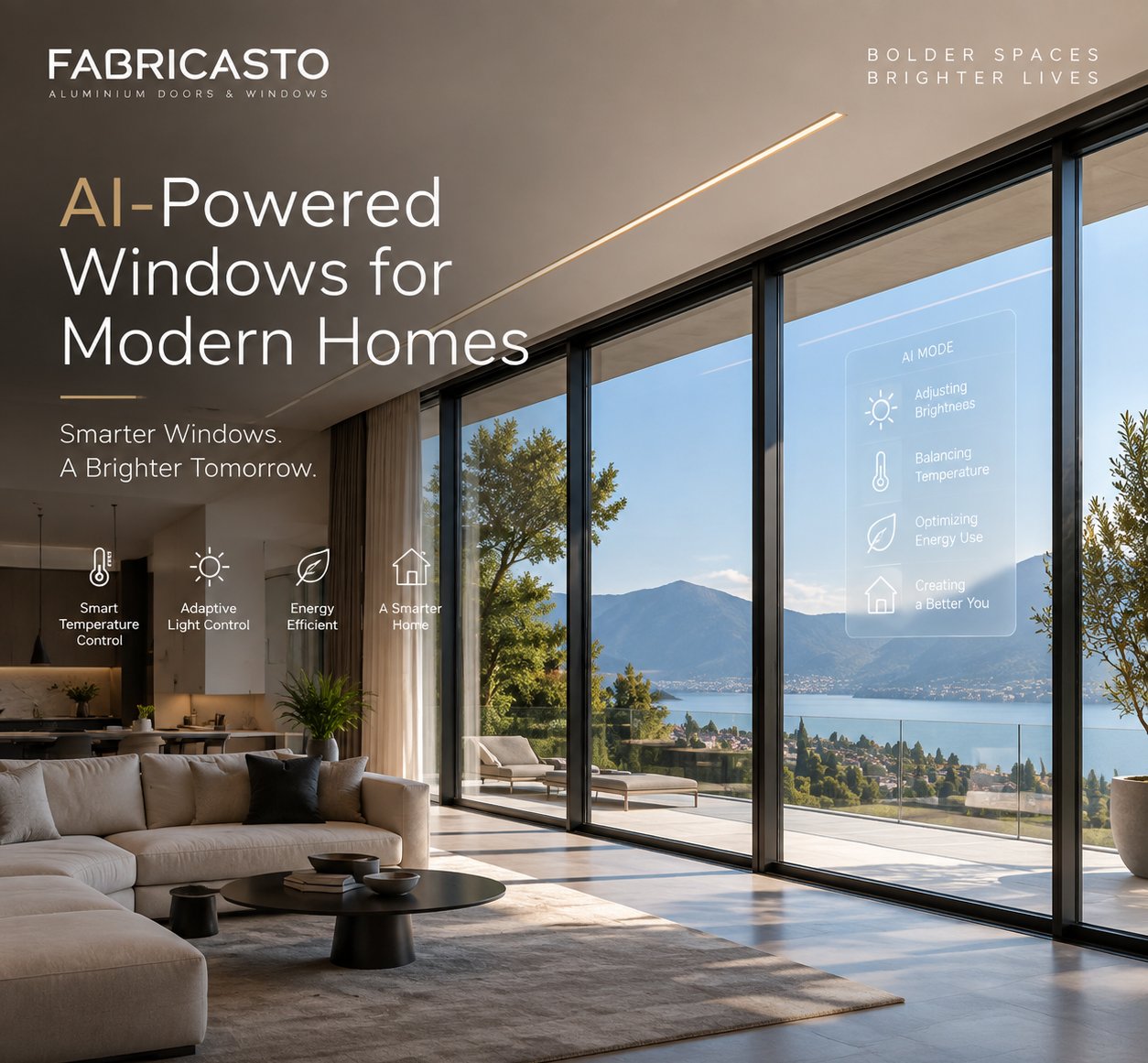
A window used to have a fairly fixed job: bring in daylight, provide a view and open when you wanted fresh air. As homes become more connected, windows can respond to sunlight, room conditions and user preferences without waiting for manual adjustment. AI-powered windows go beyond basic motorisation by combining sensors, controls and software that use real-time information to decide when glazing, shading or an opening should change. The useful part is making the building envelope respond better as conditions shift through the day.
“Smart window” is a broad term. It can mean dynamic glazing that changes tint, a motorised window controlled through an app, or a window linked to sensors and home automation. The US Department of Energy includes electrochromic glazing and automated attachments within dynamic window technologies.
AI-powered windows add a decision layer. Instead of following only a fixed command, the system can use indoor temperature, sunlight, time, occupancy or past settings to adjust.
| Feature | Basic automated window | AI-powered window |
| Control | App, switch or schedule | Data-led and adaptive |
| Inputs | Command or timer | Sensors, weather and usage patterns |
| Response | Predetermined action | Adjusts to changing conditions |
| Integration | May work alone | Can coordinate with home systems |
A motor alone does not make a window intelligent because the opening, sensors, software and building services still need to work together.
To understand this, let’s consider a west-facing living room in Gurgaon. A large glass opening may feel pleasant in the morning but bring glare and solar heat later. A connected system can use light or temperature data to trigger shading, adjust dynamic glazing where used, or coordinate with other controls.
Ventilation can become more responsive too. If an operable window is designed for automation, controls may use indoor and outdoor conditions to decide when opening it would help. Rain, outdoor air quality, security and air-conditioning still need to be part of that logic.
The Bureau of Energy Efficiency’s Eco Niwas Samhita treats heat gain, natural ventilation and daylighting as linked parts of residential envelope performance. AI does not replace those principles. What it does is it gives the control system more information to act on
They can support lower cooling and lighting demand when the window itself is properly designed. Dynamic glazing can change how much solar heat and visible light enters, while automated shading can respond before the room becomes uncomfortable. For this reason, the US Department of Energy continues to research dynamic solar-control windows. In India, results depend on orientation, glass, frame performance and shading. A poorly selected west-facing window does not become efficient simply because controls are added.
At Fabricasto, we start with the fenestration system itself. The aluminium frame, glass, sealing, drainage and opening geometry still have to perform. Intelligence should improve a sound system, not compensate for a weak one.
Smart doors and windows work better when they coordinate with lighting, cooling, blinds or security. Strong afternoon sun might trigger shading before the room heats up. An automated opening may stay closed while the air-conditioning runs, while security settings can prevent operation when the house is unoccupied.
This needs early planning. Power, sensors, motors, wiring routes and manual overrides all require space within the architecture. Adding automation after finishes are complete makes integration and servicing harder.
The point is to remove repetitive actions without turning a simple architectural element into a complicated gadget. If you still need several apps and manual corrections every day, the automation is not doing enough useful work.
For aluminium doors and windows in Delhi NCR, dust, summer heat, monsoon rain and traffic noise already place demands on frames and seals. Automation adds controls and components that must remain accessible for servicing.
Homes considering smart windows in Gurgaon should look at orientation room by room. A shaded bedroom does not need the same solar-control response as a large west-facing living area. Before choosing a smart window manufacturer or system, you need to check:
BIS guidance on IoT highlights security, privacy and interoperability for connected devices, including those that send data or accept remote commands. Indian standards also cover IoT architecture and smart-home-focused connected devices, so these questions belong in the specification rather than being left entirely to the automation installer.
AI cannot fix the wrong glass, poor window orientation or a badly detailed sill. Nor should automation make the room frustrating to use. You should still be able to override a setting and know what the system is doing. A useful smart window reduces repetitive adjustments without taking simple control away from the person in the room.
Reliability during a power, network or sensor failure also matters. If a window controls ventilation, shading or access, the project team should decide what its safe default position will be and how you operate it manually. Connected-home technology works best when failure has been considered during design rather than discovered later.
AI-powered windows are shifting fenestration from a fixed part of the façade towards a more responsive part of the home. Their value lies in connecting daylight, heat, ventilation and user preference with an opening that has already been designed properly. We, at Fabricasto, see this as a design and engineering question first. Sensors, controls and AI can add useful intelligence, but the frame, glass, hardware, installation and service plan still determine long-term performance. Discussing that integration while the architecture is still developing leaves far more room to get it right.
AI-powered windows combine an engineered window system with sensors, controls and software that can respond to changing conditions. Depending on the product, the system may use information such as sunlight, temperature, occupancy or schedules to adjust glazing, shading or an operable element. The exact capability varies, so check what the specific system actually controls.
No. Electrochromic glass is one form of dynamic glazing that can change tint when an electrical signal is applied. AI can be used to decide when that tint should change, but the two terms are not interchangeable. An AI-powered window may instead control shading, ventilation or motorised operation while using conventional high-performance glass.
They can help reduce unwanted solar heat or improve the timing of ventilation and shading, which may reduce cooling demand in suitable conditions. Actual savings depend on orientation, climate, glass, frame performance and how the home is operated. Automation should support a well-designed envelope rather than being treated as a substitute for proper glazing and shading.
They can suit Gurgaon homes, particularly where large glazed openings face strong sun or form part of a wider home-automation system. The specification should still account for Delhi NCR heat, dust, monsoon conditions and noise. Different façades may need different control strategies, so the entire house should not use one identical window setting.
Not necessarily. This depends on how the control platform is designed. Some functions may operate locally through sensors and a controller, while remote access, weather data or app features may require an internet connection. Ask what continues to work during a network outage and whether manual operation remains available if connectivity or software fails.
The basic window still needs normal care around tracks, seals, drainage and hardware. Automated systems also add motors, sensors, controllers or power supplies that may need inspection or replacement. Service access should be planned before installation. A system becomes difficult to maintain when electronic components are hidden behind finished surfaces without a practical access route.
Any connected device can introduce a cyber-security risk if it is poorly configured or unsupported. Use secure networks, unique credentials, controlled remote access and available software updates. BIS and CERT-In guidance for connected devices stresses security and privacy measures. Ask who maintains the software and how the system handles authentication and future security updates.
Sometimes parts of an existing setup can be automated, such as blinds or selected opening hardware, but full conversion depends on the frame, hardware, power availability and control system. Retrofitting dynamic glazing is a different problem. An assessment is needed before adding motors or controls because existing windows may not have been designed for those loads.
Ask exactly what is automated, which sensors are used, how the system behaves during power or internet failure, and whether manual override is available. Then check the less glamorous details: glass specification, water drainage, sealing, hardware, warranties and local service support. The intelligence is useful only when the underlying window system performs reliably.
Discuss them during architectural and services design, before window openings, electrical routes and finished floor or ceiling details are frozen. Early planning lets the architect coordinate glazing, shading, power, sensors, automation and service access together. It also gives the fenestration team time to check panel sizes, hardware and installation conditions before production begins.
AI-powered windows combine an engineered window system with sensors, controls and software that can respond to changing conditions. Depending on the product, the system may use information such as sunlight, temperature, occupancy or schedules to adjust glazing, shading or an operable element. The exact capability varies, so check what the specific system actually controls.
No. Electrochromic glass is one form of dynamic glazing that can change tint when an electrical signal is applied. AI can be used to decide when that tint should change, but the two terms are not interchangeable. An AI-powered window may instead control shading, ventilation or motorised operation while using conventional high-performance glass.
They can help reduce unwanted solar heat or improve the timing of ventilation and shading, which may reduce cooling demand in suitable conditions. Actual savings depend on orientation, climate, glass, frame performance and how the home is operated. Automation should support a well-designed envelope rather than being treated as a substitute for proper glazing and shading.
They can suit Gurgaon homes, particularly where large glazed openings face strong sun or form part of a wider home-automation system. The specification should still account for Delhi NCR heat, dust, monsoon conditions and noise. Different façades may need different control strategies, so the entire house should not use one identical window setting.
Not necessarily. This depends on how the control platform is designed. Some functions may operate locally through sensors and a controller, while remote access, weather data or app features may require an internet connection. Ask what continues to work during a network outage and whether manual operation remains available if connectivity or software fails.
The basic window still needs normal care around tracks, seals, drainage and hardware. Automated systems also add motors, sensors, controllers or power supplies that may need inspection or replacement. Service access should be planned before installation. A system becomes difficult to maintain when electronic components are hidden behind finished surfaces without a practical access route.
Any connected device can introduce a cyber-security risk if it is poorly configured or unsupported. Use secure networks, unique credentials, controlled remote access and available software updates. BIS and CERT-In guidance for connected devices stresses security and privacy measures. Ask who maintains the software and how the system handles authentication and future security updates.
Sometimes parts of an existing setup can be automated, such as blinds or selected opening hardware, but full conversion depends on the frame, hardware, power availability and control system. Retrofitting dynamic glazing is a different problem. An assessment is needed before adding motors or controls because existing windows may not have been designed for those loads.
Ask exactly what is automated, which sensors are used, how the system behaves during power or internet failure, and whether manual override is available. Then check the less glamorous details: glass specification, water drainage, sealing, hardware, warranties and local service support. The intelligence is useful only when the underlying window system performs reliably.
Discuss them during architectural and services design, before window openings, electrical routes and finished floor or ceiling details are frozen. Early planning lets the architect coordinate glazing, shading, power, sensors, automation and service access together. It also gives the fenestration team time to check panel sizes, hardware and installation conditions before production begins.



Mon - Sat 9.00 to 17.00
+91-9818630247
Mon - Sat 9.00 to 17.00
+91-9818630247

Fabricasto is a trusted provider of premium doors, windows, skylights, retractable roofs, and internal partition systems. We deliver innovative architectural solutions designed to enhance aesthetics, functionality, comfort, and long-term value for residential and commercial spaces.
341, CRC Estate, MG Road, Sultanpur, New Delhi 110030
SCO-7, Block-E, Mohali Citi Centre Avenue, Punjab
Faridabad, Pali Village, Haryana 121004