AI-Powered Windows: How Artificial Intelligence Is Transforming Modern Homes
September 04, 2026
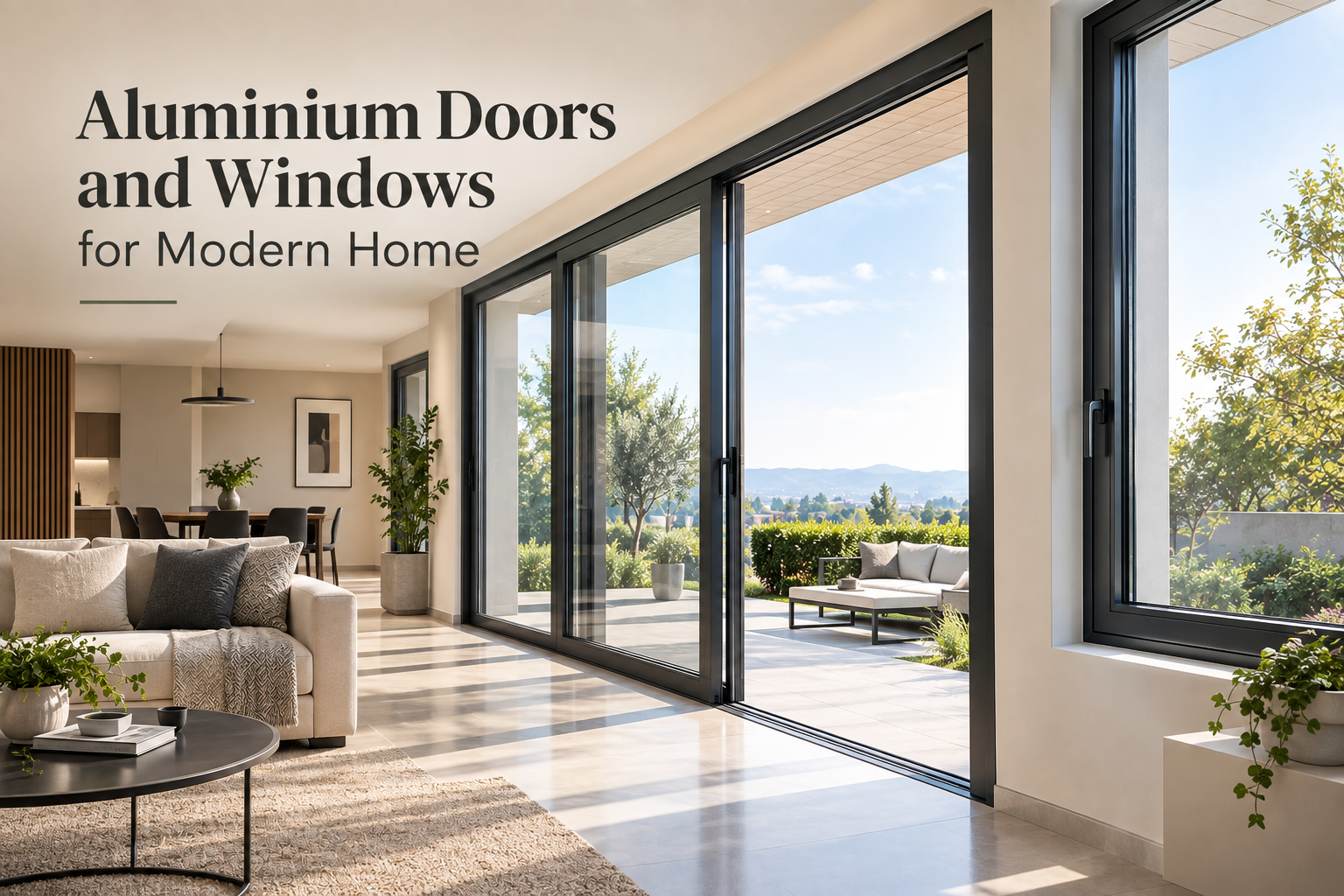
In modern homes, aluminium doors and windows shape glazed openings, the façade and how comfortably rooms handle heat, noise, dust and rain. However, aluminium alone does not decide performance. The profile, glass, hardware, seals, drainage, fabrication and installation work as one system, so each part needs to be considered before you choose an opening. And this article will touch upon just that as a complete guide for modern homes. So, let’s begin.
Aluminium balances strength, low weight and design flexibility. It can support relatively slim frames around larger glazed areas, which suits broad windows, garden-facing doors and indoor-outdoor connections. Powder-coated and anodised finishes also let the frame sit comfortably with stone, timber, plaster or façade cladding. A coordinated system can carry a similar visual language across sliders, casements and fixed glazing without forcing one profile to do every job.
The opening type should come from how you use the room, not from which format looks most trendy.
Type | Best suited to | Check early |
Sliding | Living rooms, balconies, wide views | Track depth, drainage, panel weight |
Casement | Bedrooms, studies, tighter sealing needs | Swing space, hinges, gasket compression |
Folding | Gardens, terraces, entertainment areas | Stacking space, floor track, hardware |
Fixed glazing | Stairwells, double-height spaces | Cleaning, heat gain, glass safety |
We have partnered with AluK in India that offers sliding, casement and folding systems as well as curtain walling, which is a useful example of why it helps to think in terms of a coordinated system family rather than selecting every opening separately.
So, two aluminium frames can look absolutely similar and behave differently.
Profile depth, drainage, gaskets, reinforcement and hardware influence wind resistance, sealing and operation. System limits matter too because you can’t simply widen a casement sash because the elevation demands it, and a large slider needs rollers and profiles suited to the panel weight. BIS lists IS 1948:2024 for aluminium-framed doors, windows and sliders, while IS 18648:2024 covers classification and performance requirements.
A good aluminium window manufacturer or aluminium door manufacturer should explain the system, supported sizes and performance data, not only frame width.
Glass usually makes up most of the opening, so its specification has a direct effect on comfort, safety and performance. The right choice depends on the size of the panel, its position in the home, the amount of sun it receives and the level of noise outside. Large panels may also need toughened or laminated glass depending on the application and safety requirements.
A west-facing window in Delhi NCR will deal with much stronger afternoon heat and glare than a shaded north-facing opening, so using the same glass throughout the house may not make sense. The Bureau of Energy Efficiency’s Eco Niwas Samhita also considers glazing, window area and external shading together when looking at residential envelope performance.
When comparing options, look beyond glass colour or thickness alone. Ask how much daylight the glass allows in, how well it controls solar heat, whether acoustic performance is needed and if double or insulated glazing would add value in that particular room. The glass should ultimately be selected with the aluminium system, opening size and site conditions in mind.
For homes in Delhi NCR, the right aluminium system needs to deal with more than appearance. Dust, summer heat, monsoon rain and traffic noise can all affect how a window or door performs over time, so sealing, drainage and glass selection need to be considered together.
Casement systems can work well in bedrooms and quieter spaces because the sash closes against gaskets, which helps with air and dust control. Sliding systems are often better suited to balconies and wider living-room openings, but they need good interlocks, cleanable tracks and proper drainage so regular use does not affect performance.
If you are comparing aluminium windows in Gurgaon, pay closer attention to orientation as well. West-facing openings may need better solar-control glass or external shading, while balcony doors may benefit from a different opening format depending on access and furniture placement. The better solution is usually the one that responds to the room and site, not simply the heaviest frame or most expensive profile.
AI cannot fix the wrong glass, poor window orientation or a badly detailed sill. Nor should automation make the room frustrating to use. You should still be able to override a setting and know what the system is doing. A useful smart window reduces repetitive adjustments without taking simple control away from the person in the room.
Reliability during a power, network or sensor failure also matters. If a window controls ventilation, shading or access, the project team should decide what its safe default position will be and how you operate it manually. Connected-home technology works best when failure has been considered during design rather than discovered later.
A square-foot rate helps only when quotations include the same system and scope. Before comparing, make it a point to check:
A low rate can become expensive when glass, mesh, hardware or installation details appear later as extras.
Powder coating and anodising are both common finishes for aluminium doors and windows, but the right choice depends on exposure, colour requirements and the wider design. Coastal locations need more care because salt, moisture and wind can affect coatings, fasteners and hardware faster than in inland areas.
Maintenance is straightforward when the system stays accessible. Keep tracks free of dust and grit, make sure drainage slots remain open, and check moving hardware periodically for alignment. Handles, rollers, hinges and service points should remain reachable even after stone, curtains or joinery are installed.
Aluminium doors and windows suit modern homes because they can combine larger glazed areas, clean profiles and different opening formats with practical long-term use. Their performance, however, depends on the complete system rather than the material alone.
We, at Fabricasto, bring profile selection, glass, fabrication and installation into the same discussion early. Our partnership with AluK gives us access to a system-led range that can be matched to the needs of each opening, rather than applied uniformly across the house. When those choices are made together from the start, the final result feels more considered, performs better and sits more naturally within the architecture.
Yes, when the profile, glass, hardware and installation suit the climate and opening size. Aluminium works well for large glazed areas and does not swell with moisture like timber. In hot, dusty or noisy locations, however, sealing, drainage and glass specification matter as much as the frame material, so compare complete systems before buying.
Neither is automatically better for every home. Aluminium generally allows slimmer profiles and larger panels, while uPVC can offer useful thermal performance in certain applications. Your choice should consider opening size, design, climate, maintenance, hardware and service support. For large contemporary openings, engineered aluminium systems often provide more design flexibility.
Yes, but the system should account for summer heat, dust, monsoon rain and traffic noise where relevant. Look at sealing, drainage and glass rather than profile appearance alone. Large west-facing openings may need solar-control glazing or shading, while sliding tracks should remain accessible for regular cleaning and drainage checks throughout the year.
Casement windows often achieve firmer sealing because locking hardware compresses the sash against gaskets. Sliding windows can also perform well when interlocks, seals, tracks and drainage are properly designed. The better choice depends on opening size, exposure and daily use, so compare system performance rather than assuming one format always seals better.
Choose glass around panel size, safety, orientation, heat gain, daylight and noise. Toughened or laminated glass may suit locations where safety is a concern, while solar-control or insulated glazing can help exposed rooms. The glass and frame should be specified together because glass weight also affects hardware and allowable panel sizes
They can be when the system is engineered for the panel size, glass weight and wind load involved. Slim sightlines do not remove structural demands. Profile geometry, rollers, reinforcement, glass and fixings still carry the load. Ask whether your proposed panel size falls within the selected system’s tested or engineered limits.
Costs vary with system series, profile size, glass, hardware, finish, panel configuration, mesh and installation. Large-format sliders and specialised glass usually cost more than smaller standard windows. Compare like-for-like specifications and the complete installed scope instead of relying on one aluminium window rate per square foot or a basic frame-only quotation.
Ask which system they use, how profiles are sized, what hardware and glass are included, and how fabrication quality is checked. Also review installation responsibility and after-sales support. A good aluminium window manufacturer should explain why the proposed specification suits your opening instead of quoting only a profile name and rate.
They need relatively simple but regular care. Keep tracks clean, drainage paths open, and hardware properly adjusted, and use cleaning products suitable for the finish and seals. Coastal homes may need closer attention to exposed hardware. Service parts should remain accessible so routine adjustment does not require disturbing surrounding finishes.
Choose the broad system during design development, before structural openings, sill levels and waterproofing are fixed, then take final site measurements before production. This gives the architect and fabricator time to coordinate glass sizes, drainage, curtain pockets and finished floors, reducing raised thresholds, packers and visible site adjustments later during installation.
Mon - Sat 9.00 to 17.00
+91-9818630247
Mon - Sat 9.00 to 17.00
+91-9818630247

Fabricasto is a trusted provider of premium doors, windows, skylights, retractable roofs, and internal partition systems. We deliver innovative architectural solutions designed to enhance aesthetics, functionality, comfort, and long-term value for residential and commercial spaces.
341, CRC Estate, MG Road, Sultanpur, New Delhi 110030
SCO-7, Block-E, Mohali Citi Centre Avenue, Punjab
Faridabad, Pali Village, Haryana 121004