AI-Powered Windows: How Artificial Intelligence Is Transforming Modern Homes
September 04, 2026
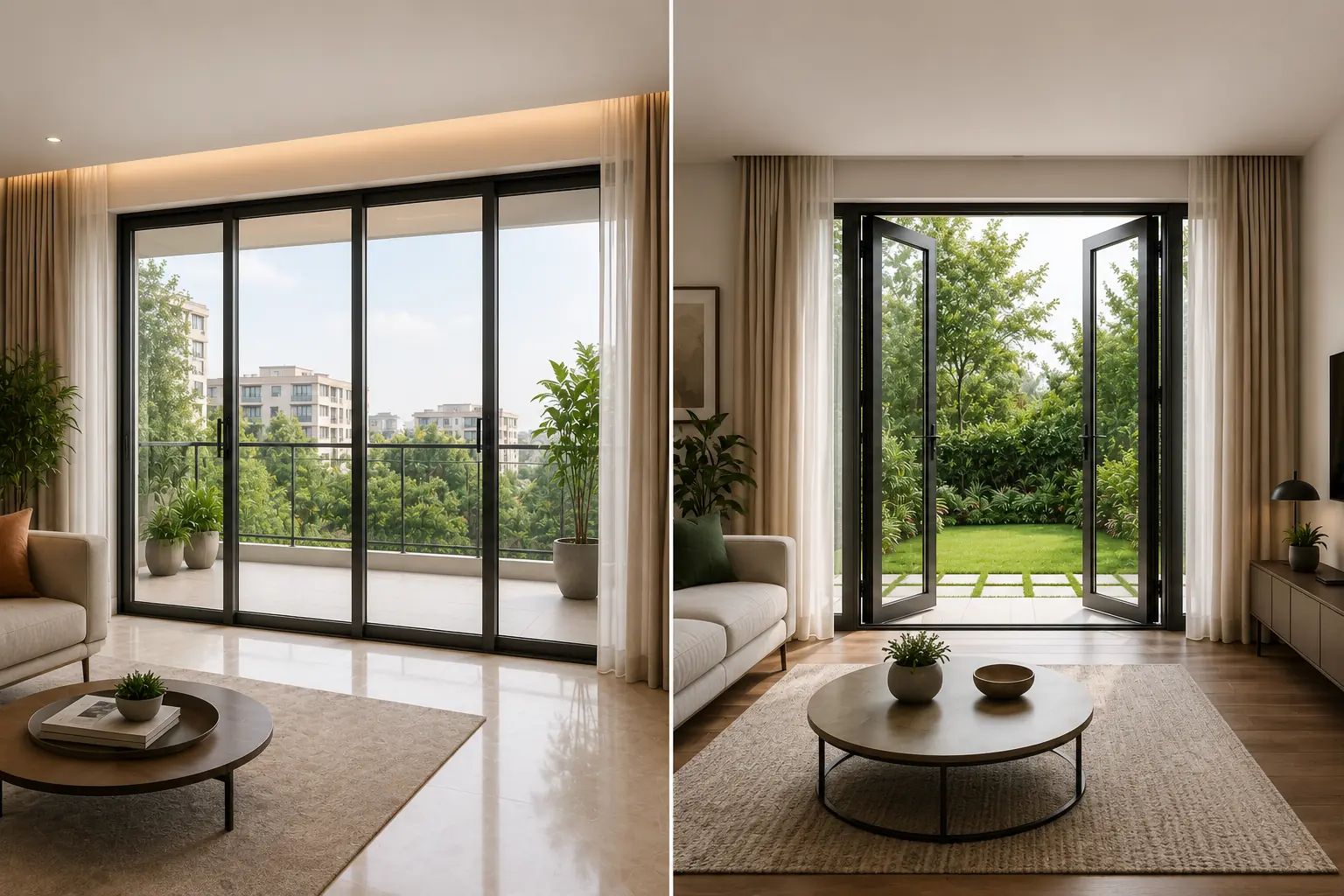
Choosing between sliding and casement doors is not only about appearance. In an Indian living room, the opening may face a balcony, lawn or courtyard while dealing with dust, noise, heat and rain. The layout of the living room affects usable floor space, ventilation, and sealing.
There is no single winner in the sliding doors vs casement doors comparison. Sliding doors suit wide openings and furniture placed near the wall. Casement doors give you a wider clear passage and firmer closure but need swing space. The better option depends on use, and this post helps you figure out which one to opt for.
A sliding door moves sideways on a track, with panels overlapping or entering a pocket. Like a casement window design, a casement door turns on side hinges. This affects movement, panel size, sealing and access.
| Point | Sliding Doors | Casement Doors |
|---|---|---|
| Opening space | No swing area needed | Clear swing area required |
| Clear access | Part of the width stays covered | Most of the width can open |
| Panel scale | Suits broad glazed panels | Limited by hinges and hardware |
| Sealing | Relies on interlocks, gaskets and tracks | Compression seals close more firmly |
| Best fit | Balconies and wide views | Gardens and full-width access |
System quality matters as much. A poor casement door can leak, while a well-designed slider handles weather exposure.
Sliding doors usually work better where a sofa, side table or dining chair sits near the opening. You do not need to reserve an arc for the shutter, and the panels do not occupy a narrow balcony when open. This makes a modern sliding door design useful in apartments where the living room serves several purposes. Casement doors can work if they open outward, but you must check the wind, railing distance, and any movement outside.
Casement doors provide the larger clear opening when both leaves open fully. They suit living rooms connected to gardens or verandas, especially during gatherings. An angled shutter may also catch a breeze.
A two-track slider leaves part of the width covered. Three-track or pocket systems can open more of the span, though they need deeper frames, wall space or earlier coordination.
The Bureau of Energy Efficiency treats glazing, shading, daylight and natural ventilation as connected parts of residential design. A large opening helps only when heat, glare and rain remain manageable.
Casement systems often have an advantage because the hardware pulls the shutter against gaskets around the frame. This compression can control air leakage, dust and noise when the profiles, glass and installation suit the site.
Sliding systems, on the other hand, rely on interlocks, seals, drainage and accurate track alignment. In Delhi NCR, weak meeting points show through dust and traffic noise. Coastal homes need dependable sill drainage and suitable hardware.
We, at Fabricasto, compare the whole assembly from start to finish. The frame, sill, hardware, gasket, glass and perimeter sealant all affect performance after repeated use.
Large openings are one reason homeowners consider slim-profile sliding doors in India. Broad panels reduce visible divisions and give the living room a clearer connection to a garden or terrace.
The clean look has technical limits. Glass weight affects rollers and operating effort, while wind pressure affects profile selection. A low sill, on the other hand, must drain and remain accessible.
Casement leaves carry weight through hinges. Oversized shutters may become tiring or stress their fixings, so fixed glazing with smaller openable leaves can work better. Cortizo’s COR Vision Plus range, for example, shows that large-format sliders involve choices of track, machining and installation.
Searches for aluminium sliding door price per sq ft India make comparison look simple. Price changes with the system, glass, panel size, tracks, hardware, finish, mesh and site preparation. Before comparing quotations, make it a point to check the following:
Casement doors may need more locks and hinges, and large sliders may need stronger rollers or deeper tracks. Always compare the installed system because a low rate may exclude performance details if you’re not careful enough to cross-check.
Maintenance should form part of the decision from the start, especially if the door opens to a balcony, garden or terrace that sees regular dust and rain. Casement doors give easier access to hinges, locks and gaskets, which makes routine checks fairly straightforward. Large outward-opening panels, however, may be harder to clean from upper floors or narrow balconies.
Sliding doors need more attention around the tracks, rollers and drainage channels. Dust can collect quickly in Indian homes, particularly near busy roads or open terraces, and blocked drainage slots may cause water to sit near the sill during the monsoon. The system should therefore allow easy cleaning and access for roller adjustment without disturbing the flooring or frame.
Your choice should also reflect how often the door will be used and who will use it. A smooth sliding panel may suit a living room with frequent balcony access, while a casement door may make more sense where sealing and a wider clear opening matter more. In both cases, good hardware and correct installation will affect long-term ease of use more than the opening style alone.
Sliding doors and casement doors serve different needs, so the better option depends on the living room rather than a general rule. Sliding doors work well for wide views, compact layouts and regular balcony access. Casement doors suit homes where stronger sealing, better ventilation and a wider opening take priority.
At Fabricasto, we begin by looking at the opening size, climate exposure, floor levels, glass, and daily use before suggesting a system. When these details are considered early, the final door fits the room more naturally and remains easier to operate and maintain over time.
Sliding doors are often better for wide openings, balconies and rooms where furniture sits near the door. Casement doors suit homes needing a larger clear opening and firmer sealing. Neither is universally better. Your decision should consider available swing space, climate, dust, noise, panel size, ventilation and how often people use the opening.
Casement doors usually provide more ventilation because both leaves can open almost fully, and an angled shutter may help catch moving air. A two-track slider keeps part of the opening covered. Wider three-track or pocket sliding systems can improve ventilation, though they need more frame depth, wall space and early design coordination.
Sliding doors can control dust and noise when the system has suitable interlocks, seals, glass and installation. Casement doors generally create stronger compression against their gaskets. For dusty or noisy locations, do not compare only the frame width. Review glass build-up, meeting points, sill detail, perimeter sealant and actual system test information.
Casement doors can work in a small room when the leaves open outward into a safe, usable balcony or terrace. Inward-opening shutters need clear space around furniture and curtains. Where neither side offers enough swing room, sliding doors usually make better use of the available floor area without interrupting movement through the room.
Price depends on the aluminium system, number of tracks, profile weight, glass, panel size, rollers, locks, finish, mesh, drainage and installation condition. Hidden tracks, motorisation and large panels cost more. Ask for a complete configuration and specification before comparing rates, because a square-foot figure alone can hide major differences in performance and scope.
A modern sliding door design usually uses broad glass panels, fewer frame divisions and a sill that aligns cleanly with nearby floors. The design still needs suitable drainage, panel support, safety glass and accessible tracks. Slim profiles should come from a tested system rather than reducing aluminium sections without checking wind, weight and movement.
They can be safe when profile size, reinforcement, glass, rollers, locking and installation suit the opening. Slim appearance does not mean weak construction, but every system has size and weight limits. Large panels also need safe glass and stable sill support. Ask the project team to check engineering details before finalising panel divisions.
Cortizo offers engineered aluminium systems, including large-format sliding options such as COR Vision Plus. Suitability depends on opening size, climate exposure, glass choice, installation and the selected configuration. COR Vision Plus is now available at Fabricasto, where the system can be reviewed against your project rather than selected only from a product image.
Casement doors offer easier access to hinges and locking points, while sliding doors need regular track and drainage cleaning. Large outward casement panels may be difficult to clean at height. The easier option depends on balcony access, panel size and whether service parts remain reachable after curtains, flooring and surrounding finishes are completed.
Finalise the broad system during design development, before structural openings, floor levels and waterproofing details are fixed. Confirm final measurements before production. Early planning helps coordinate sill depth, drainage, glass, curtain pockets, electrical points and furniture. Leaving the decision until after finishes begin usually narrows options and creates visible adjustments.

Mon - Sat 9.00 to 17.00
+91-9818630247
Mon - Sat 9.00 to 17.00
+91-9818630247

Fabricasto is a trusted provider of premium doors, windows, skylights, retractable roofs, and internal partition systems. We deliver innovative architectural solutions designed to enhance aesthetics, functionality, comfort, and long-term value for residential and commercial spaces.
341, CRC Estate, MG Road, Sultanpur, New Delhi 110030
SCO-7, Block-E, Mohali Citi Centre Avenue, Punjab
Faridabad, Pali Village, Haryana 121004