Aluminium Door & Window Drawings: Architect Checklist
October 15, 2026
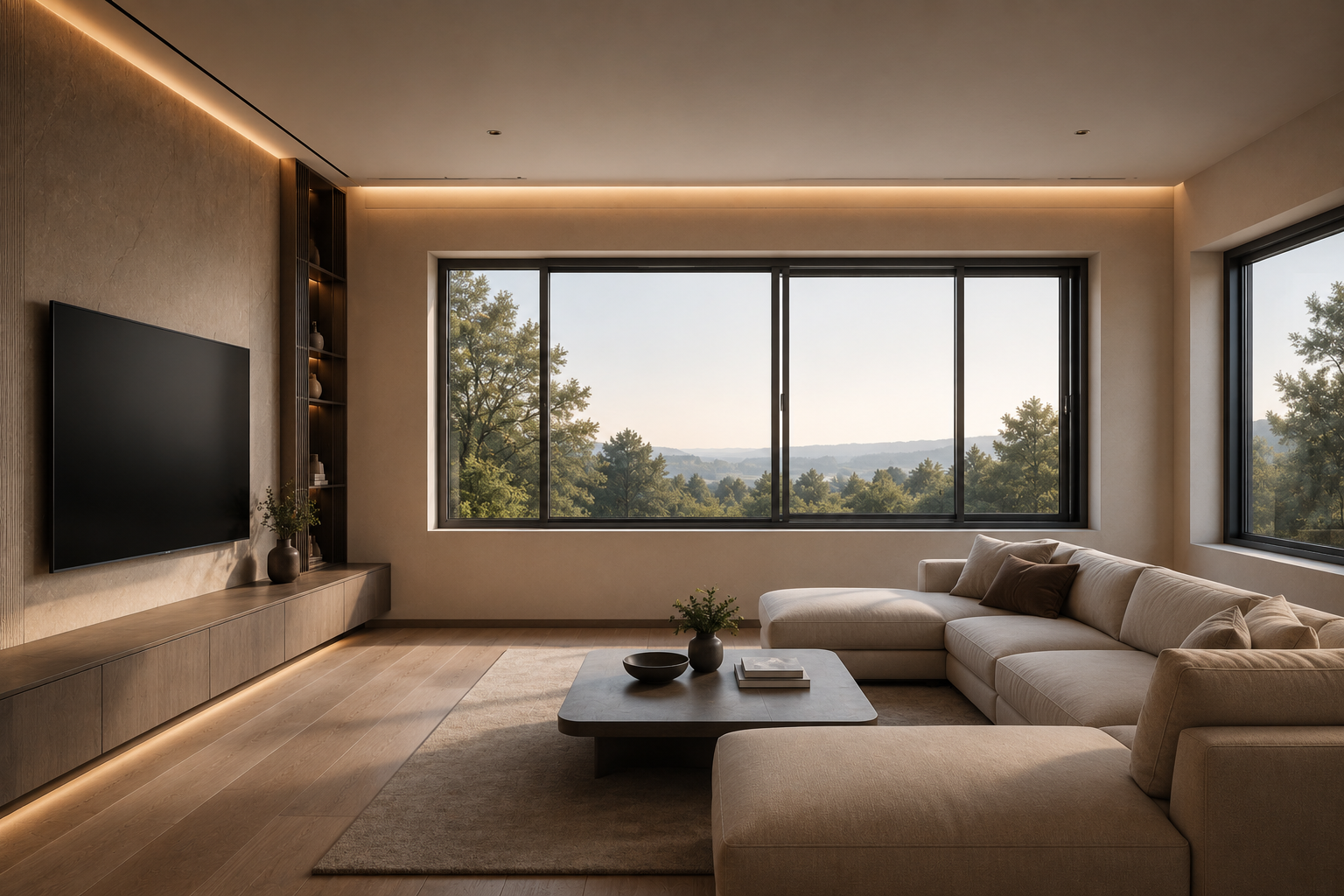
Windows have an unusually large influence on how a luxury home feels. They decide how much of the outside you see, how daylight enters the room, where furniture can sit, how quiet a bedroom feels at night, and how comfortable the interiors remain when the weather outside becomes difficult.
That is why choosing windows for luxury homes cannot begin and end with frame colour or glass size.
We, at Fabricasto, approach windows through that combination of design and performance. Fabricasto works across premium aluminium windows and other architectural systems for residences, with the opening treated as part of the wider architecture rather than a product selected in isolation. For homeowners looking at refined European-led systems too, brands such as Soranzo can enter this conversation naturally, especially where slimmer visual lines and a more considered window language are part of the design brief.
The first question should not be, “Which window do I like?” It should be, “What does this opening need to do for this room?”
A living room facing a garden may need a wide visual connection and large sliding panels. A bedroom facing a busy road may put acoustic comfort ahead of maximum glass area. A stairwell may need daylight but very little everyday operation. A bathroom needs privacy, ventilation and materials that cope well with moisture.
This room-by-room thinking is particularly important with modern home windows because contemporary architecture often uses larger openings and fewer visual interruptions. Once glass areas grow, every decision becomes more noticeable. Frame proportion, glare, drainage, operating effort and even the position of a handle start affecting the experience.
The same window specification should therefore not be repeated across the entire house simply because consistency feels easier. Good consistency comes from a shared design language, while performance can still change according to orientation and use.
Slimmer profiles have become closely associated with luxury residential design, and for good reason. Reducing visible aluminium gives the glass more prominence and allows the view to carry more of the composition. This works particularly well in homes with gardens, courtyards, terraces or long exterior views.
But “slim” should never mean choosing the smallest-looking section without considering the opening size. A frame still has structural work to do. Larger glass panels, taller openings and stronger wind exposure place more demand on the aluminium system, connections and hardware.
The best luxury home windows make the profile feel visually light while remaining technically appropriate for the opening. You should be able to enjoy thinner sightlines without making the window feel fragile, difficult to operate or poorly suited to the scale of the façade.
This is one area where premium systems from Soranzo distinguish themselves quietly. The refinement is not simply in making aluminium disappear. It is in controlling how much of it remains visible while giving the system enough depth and strength to do its job properly.
Opening style affects far more than appearance. It affects ventilation, usable opening width, furniture placement, insect-screen options, cleaning access, and how much effort the window asks of you every day.
Sliding systems make sense when you want large glass panels without a sash opening into the room. They work particularly well for balconies, gardens, terraces and living spaces where uninterrupted views matter.
In a luxury home, however, panel size matters. Large sliding panels need high-quality rollers, tracks and hardware so the movement remains controlled rather than heavy.
Casements are useful where ventilation and tighter closure are priorities. Because the sash closes against the frame rather than merely sliding past another panel, a well-designed casement system can provide strong sealing.
They suit bedrooms, studies and smaller openings well, but you need enough clearance for the sash. On higher floors, the direction of opening, wind exposure and safe operation also deserve careful consideration.
Tilt-and-turn systems offer two ways to use the same opening. The sash can tilt inward from the top for controlled ventilation or open more fully when required.
For premium homes, this flexibility can be useful in bedrooms, studies and spaces where you want ventilation without keeping a large opening fully exposed. The hardware is more complex than that of a basic casement, so system and installation quality matter.
A fixed window does not open, which can sound limiting until you use it in the right place. Where the job is simply to bring in daylight or frame a view, fixed glazing can give you cleaner lines and fewer hardware interruptions.
Large fixed panels are especially useful around double-height spaces, staircases and compositions where operable windows elsewhere already provide ventilation. They also allow the architecture to use glass without adding unnecessary moving parts.
Many of the best windows for luxury homes are actually combinations of window types rather than a single repeated system.
A large living-room elevation might use broad fixed glazing beside a sliding opening. A bedroom could combine a fixed view panel with a smaller operable casement. A staircase may use uninterrupted fixed glass, while the adjacent corridor handles ventilation through another opening.
This makes the façade cleaner because every pane does not need to move. It can also improve usability. Operable panels stay within comfortable reach, while larger fixed areas carry the view.
The important part is visual coordination. Mullions, frame depths and horizontal lines should relate to one another so the elevation reads as one composition rather than several window products placed next to each other.
Glass is where many homeowners receive incomplete advice. Asking whether a window has 6 mm, 8 mm or 12 mm glass does not tell you enough about how that window will perform.
You also need to consider whether the glass is monolithic, laminated or part of an insulated glazing unit; whether solar control is required; what level of visible light you want; and whether acoustics or safety influence the specification.
The Bureau of Energy Efficiency’s residential envelope framework specifically considers factors such as window size, glazing type and external shading because openings influence heat gain, natural ventilation and daylight inside a home.
This becomes more important as glazing areas increase. The architectural windows used in a contemporary villa may occupy far more façade area than windows in a conventional house. At that scale, glass selection starts to affect room comfort noticeably.
A north-facing window and a west-facing window should not automatically receive the same treatment.
West-facing glass can take strong low-angle afternoon sun, especially in warmer Indian regions. South-facing openings behave differently depending on season, overhang depth and local climate. North-facing windows often receive softer daylight, while east-facing rooms may experience stronger morning sun.
This does not mean every elevation needs a completely different window system. The frame language can remain consistent while glazing, shading and opening strategy respond to orientation.
If you are planning high-end windows for a home in Delhi NCR, for instance, summer heat and dust become important parts of the brief. In a coastal location, exposure, moisture and wind conditions may weigh more heavily. In quieter, milder locations, daylight and views may lead the decision instead.
That is why climate-responsive window design usually produces a more comfortable house than selecting one premium specification and applying it everywhere.
How should balconies, terraces and gardens be treated differently?
A balcony has limited depth, so furniture scale, drainage and privacy need close attention. A thoughtful balcony design should also leave enough clear space for movement rather than turning every available corner into seating or planting.
A terrace offers more flexibility but faces greater sun, wind and rain exposure, making waterproofing and shade more important. In terrace design, the positions of pergolas, planters, built seating and services should be considered before waterproofing and floor finishes are complete.
A garden connection can continue through paving, planting, decks or a covered veranda, drawing movement outward while creating a sheltered transition from the indoor room.
The National Building Code provides a model framework for construction, while local authorities apply development controls. The Ministry of Housing and Urban Affairs also publishes Model Building Bye-Laws (MBBL), so balcony projections, terrace changes and built additions should be checked against local requirements.
Modern luxury homes often aim for floor-to-ceiling glass, wide sliding openings and fewer vertical divisions. The effect can be excellent, but larger panels bring several technical questions with them.
Glass becomes heavier as dimensions and build-ups increase. Frames need to carry greater loads. Sliding hardware needs to move those panels repeatedly. Wind pressure becomes more important on tall elevations and exposed sites. Installation tolerances become tighter too.
This is where a window should be sized as a system rather than drawn as an architectural rectangle and solved later. Sometimes one additional mullion produces a much more reliable opening. In another location, a higher-performance system may allow the larger clear span to remain.
Good premium windows make large glazing feel effortless. That appearance usually comes from more engineering behind the frame, not less.
If your home faces a main road, school, market, construction corridor or dense urban neighbourhood, sound should enter the discussion early.
People often assume that thicker glass automatically solves external noise. Acoustic performance is more complicated. Glass composition, differences between pane thicknesses, air spaces, laminated interlayers, frame seals and installation quality can all affect the result.
The window also needs to close properly. A sophisticated glass build-up loses much of its value if air gaps remain around the sash or installation perimeter. Sound travels through weak points, and the smallest unresolved junction can undermine a much more expensive specification.
For urban windows for luxury homes, this is often one of the strongest arguments for looking beyond appearance. Quietness is a form of comfort you notice every day, even though you cannot see the component creating it.
Choosing windows for luxury homes is ultimately an exercise in balance. You want generous glass without uncomfortable heat. Slim profiles without sacrificing structural logic. Easy movement without oversized hardware. Quiet interiors without turning every opening into a heavy technical assembly.
That balance rarely comes from choosing one “best” window and repeating it everywhere. It comes from reading each part of the home properly and then creating a common architectural language across different performance needs.
At Fabricasto, we believe this is where a window starts becoming more than a fabricated opening. Design, engineering, glass, hardware and installation have to work as one system. Whether the project calls for restrained fixed glazing, expansive sliders, more specialised operable systems, or refined options such as Soranzo, the final choice should improve both the architecture and everyday experience of the home.
If you are still at the planning stage, that is the right time to have this conversation. Window decisions made early leave far more room to get proportion, comfort and execution right.
Frequently Asked Questions
The best windows for luxury homes depend on the room rather than one universal product. Large sliders work well where views and access matter, while casement or tilt-and-turn systems can suit bedrooms and studies. Look at glazing, sealing, hardware, orientation, acoustics and installation quality alongside frame design before making the final choice.
Yes. Aluminium can support relatively slim frames, large glazed areas and clean contemporary detailing, which makes it well suited to modern home windows. The result still depends on the complete system. Profile design, finish, glass, hardware, weather sealing and fabrication quality matter considerably more than choosing aluminium as a material on its own.
Not every opening automatically needs double glazing. Its value depends on climate, orientation, glass area, acoustic exposure and the performance you want from the room. An insulated glazing unit can help in suitable applications, but glass specification should follow the actual problem. A poorly selected double-glazed unit is not automatically better than well-chosen single glazing.
There is no single opening style that guarantees acoustic comfort. Glass composition, pane thickness, laminated glass, air spaces, frame seals and installation all influence sound transmission. Well-sealed casement-style systems can offer advantages, but the complete specification matters. For road-facing bedrooms, ask for an acoustic strategy rather than simply requesting “soundproof glass”.
The best windows for luxury homes depend on the room rather than one universal product. Large sliders work well where views and access matter, while casement or tilt-and-turn systems can suit bedrooms and studies. Look at glazing, sealing, hardware, orientation, acoustics and installation quality alongside frame design before making the final choice.
Yes. Aluminium can support relatively slim frames, large glazed areas and clean contemporary detailing, which makes it well suited to modern home windows. The result still depends on the complete system. Profile design, finish, glass, hardware, weather sealing and fabrication quality matter considerably more than choosing aluminium as a material on its own.
Not every opening automatically needs double glazing. Its value depends on climate, orientation, glass area, acoustic exposure and the performance you want from the room. An insulated glazing unit can help in suitable applications, but glass specification should follow the actual problem. A poorly selected double-glazed unit is not automatically better than well-chosen single glazing.
There is no single opening style that guarantees acoustic comfort. Glass composition, pane thickness, laminated glass, air spaces, frame seals and installation all influence sound transmission. Well-sealed casement-style systems can offer advantages, but the complete specification matters. For road-facing bedrooms, ask for an acoustic strategy rather than simply requesting “soundproof glass”.

Mon - Sat 9.00 to 17.00
+91-9818630247
Mon - Sat 9.00 to 17.00
+91-9818630247

Fabricasto is a trusted provider of premium doors, windows, skylights, retractable roofs, and internal partition systems. We deliver innovative architectural solutions designed to enhance aesthetics, functionality, comfort, and long-term value for residential and commercial spaces.
341, CRC Estate, MG Road, Sultanpur, New Delhi 110030
SCO-7, Block-E, Mohali Citi Centre Avenue, Punjab
Faridabad, Pali Village, Haryana 121004