Renson ventilation and sun protection systems
November 16, 2026
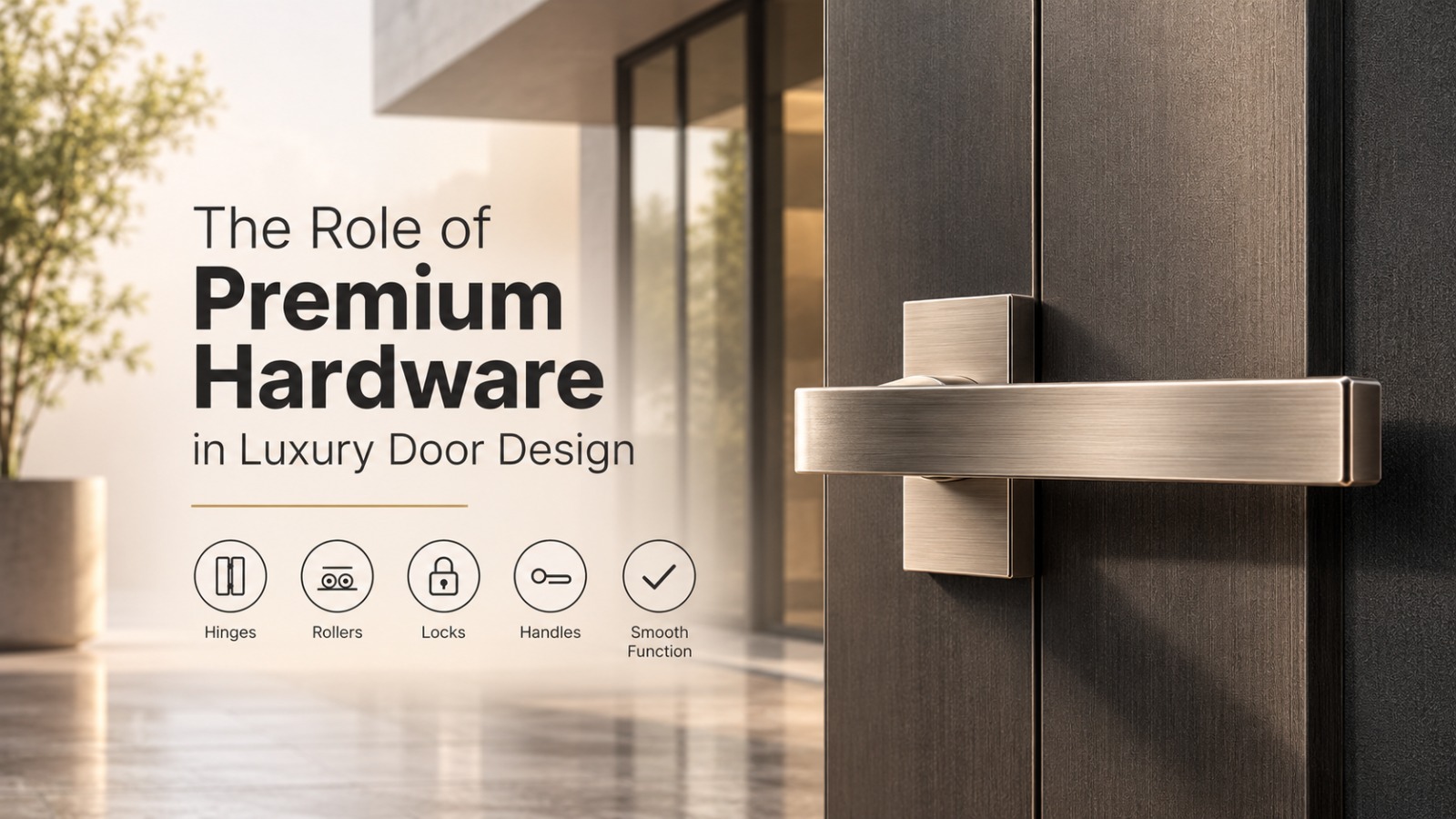
A luxury door is usually judged first by what you can see, such as its proportions, the aluminium profile, the glass and the finish. But once you start using it every day, your experience of the door depends just as much on the parts that are less visible. The way a panel moves, how firmly it closes, how the handle feels in your hand and whether the sash stays aligned after years of use all come back to the hardware.
That becomes especially important with premium aluminium doors, where larger panels and heavier glass place more demand on hinges, rollers, tracks and locking systems. This is also where our work with Soranzo, one of Fabricasto’s premium fenestration partners, becomes relevant. With large-format aluminium systems, hardware cannot be left until the frame and glass have already been decided.
Architectural hardware covers far more than the handle you see on the finished door. Depending on the opening, it can include hinges, rollers, tracks, multipoint locks, cylinders, restrictors, closers and the mechanisms that allow large panels to slide, fold or lift. Each has a separate job, but their performance is linked. A roller may be rated for a heavy sash, for instance, but it still relies on a properly supported track and correctly aligned frame. On larger aluminium doors and windows, however, even small mismatches start to show up quickly. A few millimetres of movement can affect locking, gasket compression, or the effort needed to open the panel, which is why hardware must be considered part of the complete system.
As door panels get taller and wider, their weight increases, and the hardware has more work to do. A floor-to-ceiling glazed door may look visually simple, but its rollers or hinges are carrying a much greater load than those on a smaller opening.
This is why we, at Fabricasto, prefer to look at panel dimensions, glass weight and hardware capacity together. If one changes, the others may need to change too. It is far easier to make that decision during design and fabrication than to correct a dragging or misaligned panel after installation.
Hinges control the position of the moving sash, so poor selection can affect clearances, locking, and even how seals meet the frame. Concealed hinges may create a cleaner visual result, but they still need enough load capacity and adjustment for the door they support.
With sliding systems, the experience is different, but the principle is similar. Rollers carry the panel while the track guides its movement, so both need accurate installation and continuous support. A wide glazed door should move smoothly without needing excessive force halfway along the opening.
Then there is the site environment. Dust and grit can settle into exposed tracks around terraces or balconies, while poorly planned stone or joinery can make adjustment points difficult to reach. Minimal detailing works best when serviceability has been considered before those finishes go in.
The hardware also determines how consistently a sash returns to its intended closed position. Hinges, rollers and locking points need to bring the panel back against the gaskets with enough accuracy for those seals to work as designed. If a sash drops or a locking point moves out of alignment, small gaps can start affecting dust control, air leakage, water resistance and acoustic comfort.
Multipoint locking can be useful for larger doors because the sash engages at several positions rather than relying on a single central point. But it still depends on alignment. A stronger lock does not compensate for a poorly supported frame or a panel that no longer sits where it should.
Handles are among the few parts of the door you physically interact with every time you use it, so grip, position and operating force matter just as much as finish. A beautifully designed handle can still feel wrong if it needs too much effort or sits awkwardly against the frame.
BIS guidance for door handles considers factors such as durability, corrosion resistance and operation. For an exterior door, you should also check the lock behind the handle, how it is fixed, whether the finish suits the exposure and whether replacement parts remain accessible later.
Different openings place different demands on their hardware, so the same package should not simply be carried across the house.
| Door type | Key hardware | Main concern |
| Hinged door | Hinges, lock, handle | Panel weight and alignment |
| Sliding door | Rollers, track, lock | Smooth movement and support |
| Lift-and-slide | Carriages, operating gear, locks | Heavy panels and sealing |
| Folding door | Hinges, rollers, guides | Alignment and stacking |
| Entrance door | Heavy-duty hinges, lock, access hardware | Security and regular use |
A change in the opening type usually changes the entire hardware logic. Moving from a conventional slider to a lift-and-slide system, for example, affects the carriage, locking method, and how the panel engages with its seals. It is not simply a different handle on the same door.
By the time fabrication drawings are approved, the team should know the panel dimensions, glass weight, opening direction, threshold and broad locking requirements. That gives enough information to check whether the proposed hardware actually suits the door being built.
The surrounding detail matters too. Handles should clear walls, curtains and furniture. Tracks need proper support, while rollers, hinges and adjustment points should remain accessible once flooring and interior finishes are complete.
This is where working with a system partner such as Soranzo becomes useful. The frame, glass and operating hardware can be considered as one engineered opening rather than a collection of separate components, making it easier to protect both the design proportions and the way the door needs to function.
Even well-selected hardware can struggle if the frame is installed out of level or square. Distortion changes hinge geometry, roller alignment and locking positions, while a sliding track without proper support can begin to affect movement once the full glazed weight sits on it.
Installation therefore needs a second check after glazing. The door should be operated under its final weight, and rollers, hinges, and locks adjusted where necessary rather than assumed correct because they worked before the glass went in.
At Fabricasto, that installation and commissioning stage is part of the same conversation as system selection and fabrication. It is often where a technically sound specification either carries through properly or starts losing the performance that was designed into it.
Premium hardware still moves, carries load and faces dust, moisture and regular handling, so it needs a sensible level of care. Sliding tracks should stay clean, fasteners and alignment need occasional checking, and any noticeable increase in operating effort should be investigated rather than ignored.
That does not always mean adding lubricant. A dirty track, misaligned roller or dropped sash may need cleaning or adjustment instead. Coastal and highly exposed locations also deserve more attention because unsuitable materials and finishes can corrode faster under salt and moisture exposure.
Premium architectural hardware rarely attracts attention when it is doing its job well, and that is probably the point. It allows a large door to move with less effort, keeps the sash aligned, helps the seals engage correctly and gives the lock a firm, predictable action whenever the door closes.
For us at Fabricasto, this is why hardware is never treated as the final decorative layer. Through our partnership with Soranzo, we look at profiles, glass, hardware, fabrication and installation as parts of the same door system. When those decisions are made together early, the result feels refined not only because of how it looks, but because of how naturally it works every day.
Architectural hardware includes the components that allow a door to move, close, lock and remain correctly positioned. Depending on the system, this may include hinges, rollers, tracks, handles, cylinders, multipoint locks and closers. Their specification needs to suit the door size, glass weight, frequency of use and conditions around the opening.
Larger glazed doors place more load on hinges, rollers and locking mechanisms. The right hardware carries that weight while keeping the sash aligned and reasonably easy to operate. If the components work too close to their limits, movement and sealing can gradually deteriorate even when there is nothing visibly wrong with the aluminium frame itself.
Start with the rollers or carriages, track, locking mechanism and handle. Ask how much panel weight the system supports and how the rollers are adjusted after installation. It is also worth checking whether those components remain accessible once flooring, stone or joinery is complete, because even premium sliding doors may need adjustment over time.
Multipoint locking can help a large sash engage with the frame at several locations, which may support security and more consistent sealing. However, those locking points need to meet their keeps accurately. If the sash drops or the frame is misaligned, adding more locking points will not solve the underlying problem.
Hinges carry the moving panel and keep it positioned correctly within the frame. If their capacity, fixing, or location does not suit the door, the sash may begin to drop or rub. Proper hinge selection, together with accurate installation, helps the door maintain its clearances and operate consistently through repeated daily use.
Several things can cause this, including dirt in the track, roller damage, poor adjustment, inadequate sill support or a frame that has moved out of square. Cleaning the track is a sensible first step, but if movement remains heavy, the alignment and rollers should be checked rather than simply adding lubricant.
Not necessarily. A contrasting handle can be part of the design, while concealed components may use a different finish altogether. What matters is that the visible hardware works with the door aesthetically and that any exposed components have suitable resistance to handling, moisture and corrosion for the location where they will be used.
There is no single interval that suits every door because panel size, frequency of use and exposure vary. Keep tracks clean and watch for changes in movement, alignment or locking effort. If a door becomes noticeably harder to operate, inspect and adjust it early rather than wait for a component to fail.
Hardware can help by keeping the sash correctly aligned and maintaining pressure on the seals when the door closes. It cannot compensate for unsuitable glass, weak gaskets or gaps around the frame, though. For acoustic performance, the hardware, glazing, frame, sealing and installation need to work together as one complete opening.
Ideally, hardware should be selected before fabrication drawings are approved, once the panel size, glass weight and opening type are known. That gives the team time to check capacity, fixing zones, handle positions and maintenance access. Leaving it until procurement can limit options if the preferred hardware does not suit the final door.



Mon - Sat 9.00 to 17.00
+91-9818630247
Mon - Sat 9.00 to 17.00
+91-9818630247

Fabricasto is a trusted provider of premium doors, windows, skylights, retractable roofs, and internal partition systems. We deliver innovative architectural solutions designed to enhance aesthetics, functionality, comfort, and long-term value for residential and commercial spaces.
341, CRC Estate, MG Road, Sultanpur, New Delhi 110030
SCO-7, Block-E, Mohali Citi Centre Avenue, Punjab
Faridabad, Pali Village, Haryana 121004