Aluminium Doors and Windows: The Complete Guide for Modern Homes
September 12, 2026
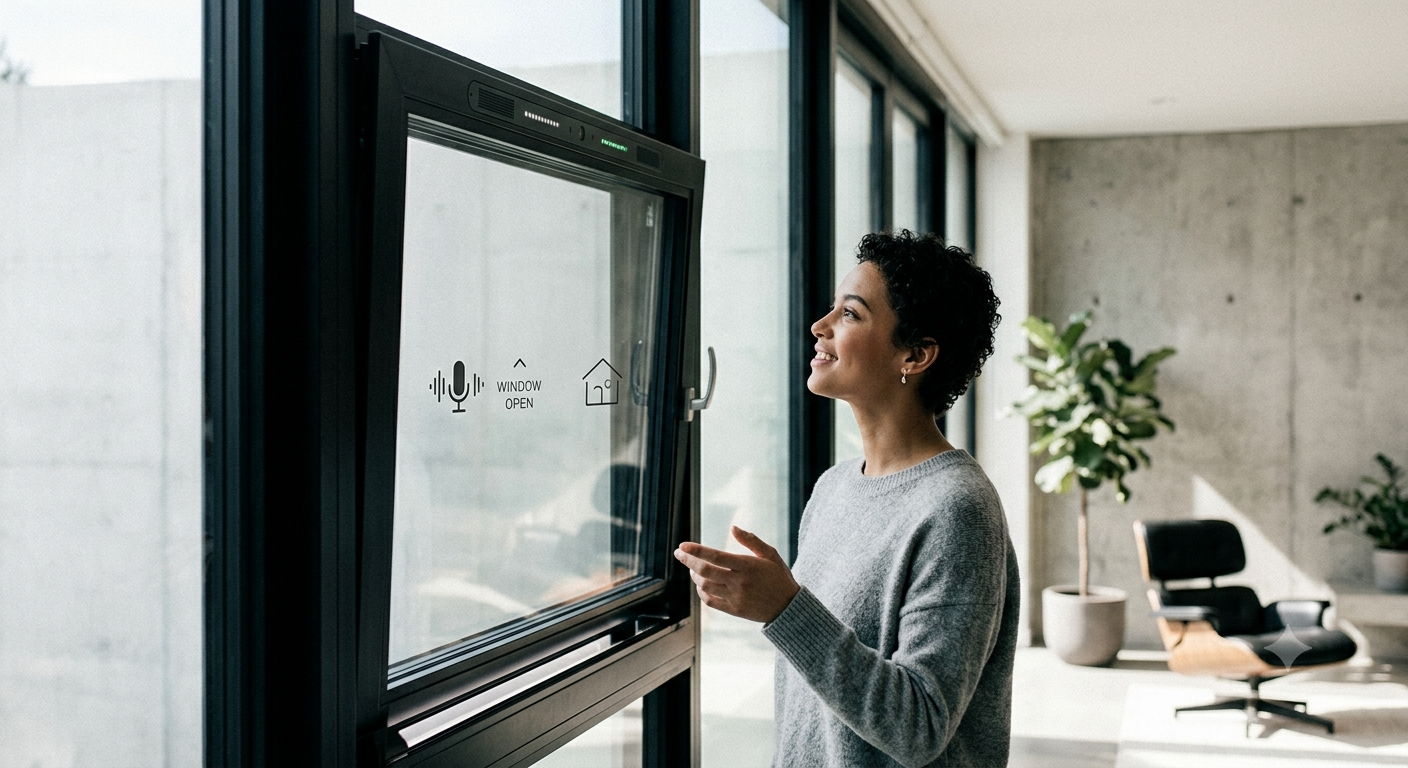
Opening a window with a voice command sounds simple, but several things happen behind it. A motor moves the sash or panel, the control system interprets the request, and sensors may need to stop the action when rain, wind or an obstruction makes opening unsafe.
That makes voice-controlled windows less about novelty and more about coordination. When the window, motorisation, controls and building services work together, voice control can make ventilation and everyday routines easier without making the home harder to use.
Voice-controlled windows are operable windows linked to a motor or actuator and a control platform that accepts spoken commands through a compatible voice assistant. Depending on the setup, you may be able to open, close or move a window to a preset position. They differ from a basic motorised window, which may use only a switch or remote, and from AI-powered windows that can respond to sensor data or learned preferences. Voice control is one input within the wider category of smart doors and windows.
If your project uses an engineered fenestration system such as those from Soranzo, voice control should be treated as an additional layer around the opening rather than something assumed to be built into the window itself. The frame, hardware, motorisation and control system still need to be checked together.
A spoken request passes through several parts before the window moves. The assistant interprets the command, the smart-home platform identifies the device, and a controller sends the instruction to the actuator.
Part | Role |
Voice assistant | Receives the command |
Smart-home platform | Identifies the window |
Controller | Sends the operating signal |
Motor or actuator | Moves the window |
Sensors | Check position or unsafe conditions |
For the system to work smoothly, each part needs to speak the same language. Matter was developed to improve interoperability between connected-home products and platforms, but the selected controller, gateway and voice service still need to support one another.
The benefit is strongest where reaching the window is inconvenient. High clerestory windows, openings above staircases and kitchen windows behind deep counters can become easier to operate.
Voice control can also help when your hands are occupied or when a resident has limited mobility. It becomes more useful when commands form part of a routine, such as closing selected windows when you leave home.
The aim is simple: reduce repetitive actions without turning a basic opening into a complicated gadget.
Voice commands should not bypass safety logic. Motorised openings can create trapping points, so the system needs safeguards suited to the window’s size and position.
For homes in Delhi NCR and Noida, automation has to work alongside heat, dust, rain and seasonal air-quality changes. Opening automatically because a room is warm may make little sense if the outdoor air is hotter or polluted. The Bureau of Energy Efficiency links natural ventilation, daylight and heat gain within residential envelope performance. Voice control can make an opening easier to use, but it does not replace correct glazing, shading, sealing or orientation..
AI cannot fix the wrong glass, poor window orientation or a badly detailed sill. Nor should automation make the room frustrating to use. You should still be able to override a setting and know what the system is doing. A useful smart window reduces repetitive adjustments without taking simple control away from the person in the room.
Reliability during a power, network or sensor failure also matters. If a window controls ventilation, shading or access, the project team should decide what its safe default position will be and how you operate it manually. Connected-home technology works best when failure has been considered during design rather than discovered later.
Voice-controlled windows need early coordination because electrical and digital systems meet the physical frame. Power, cable routes, controller location, manual override and service access should be decided before fabrication and finishes.
We, at Fabricasto, also look at the opening first. Panel weight, hardware, frame geometry, drainage and sealing still decide whether the window can operate smoothly over time.
Where a project uses premium fenestration such as Soranzo, introduced exclusively in India by Fabricasto, the same rule applies where you have to first confirm that the physical system suits the opening, then coordinate compatible motorisation and voice control around it rather than assuming every window is voice-ready.
Once a window connects to your home automation system, access and security become part of the specification. You should know who can operate it, whether commands can be sent remotely, how user permissions are managed and whether the system receives regular software updates. BIS guidance for smart-home IoT systems also covers secure local and remote control and wider trustworthiness requirements for connected devices.
It is equally important to plan for moments when the technology is unavailable. If the internet drops, the smart-home hub stops responding or there is a power cut, the window should still have a clear and safe way to operate. Manual override, backup control and the window’s default position during a system failure should therefore be decided during planning, rather than left until a problem occurs.
The cost of voice-controlled windows depends on both the physical window system and the automation around it. Actuator capacity, sensors, control hardware, wiring, programming and platform integration can all affect the final price, especially when the opening is large or technically complex.
The window itself also matters. Panel size, profile system, glass, hardware and installation conditions will influence the base cost before automation is added, so two similar-looking systems can end up with very different overall budgets.
If you are comparing smart window manufacturers in Delhi NCR or aluminium doors and windows in Noida, check exactly what each quotation includes. Where a system such as Soranzo is being considered, ask for the fenestration and automation scopes to be shown separately so you can see what sits within the window package and what is being added for motorisation, controls, electrical work, commissioning and after-sales support. Compare the complete installed and operational system rather than the window cost alone.
Conclusion
Voice-controlled windows make the most sense when they remove effort from a well-designed opening. The spoken command is only the visible part; safe movement, reliable controls, weather logic, security and manual access decide whether the system remains useful.
We, at Fabricasto, approach smart fenestration from that complete-system view. Automation works best when the frame, hardware, motor, controls and site conditions are discussed together before fabrication, so the technology feels integrated into the home rather than added on later.
Voice-controlled windows are motorised openings linked to a smart-home platform that accepts spoken commands through a compatible voice assistant. You may be able to open, close or set a window to a chosen position. The exact functions depend on the actuator, controller and platform, so confirm supported commands before specifying the system.
They can control compatible window systems when the required controller, hub or smart-home platform supports that voice ecosystem. Compatibility should never be assumed from the motor alone. Check the full chain from actuator to controller and platform, including whether commands work locally, remotely or only through an active internet connection.
They can be designed with safety features, but motorised movement needs careful control around children. Obstacle detection, restricted commands, position limits and manual overrides may all be appropriate depending on the window. Large or easily reached openings need more attention than high-level ventilators, and the installation should follow the system manufacturer's safety requirements.
Casement windows often achieve firmer sealing because locking hardware compresses the sash against gaskets. Sliding windows can also perform well when interlocks, seals, tracks and drainage are properly designed. The better choice depends on opening size, exposure and daily use, so compare system performance rather than assuming one format always seals better.
Usually, powered movement stops unless the system has backup power or another provision. Some windows may include a manual release or manual operating method, but this depends on the hardware. Ask how the opening behaves during power, network and controller failures, especially if it forms part of normal ventilation or emergency access.
Sometimes, but not every existing window is suitable. The frame, sash weight, hinges or sliding hardware, fixing points and available space for an actuator must first be checked. You also need power and a compatible controller. A retrofit assessment is safer than attaching a motor to a window that was never designed for automated movement.
Costs vary with system series, profile size, glass, hardware, finish, panel configuration, mesh and installation. Large-format sliders and specialised glass usually cost more than smaller standard windows. Compare like-for-like specifications and the complete installed scope instead of relying on one aluminium window rate per square foot or a basic frame-only quotation.
They can be useful, particularly for high or difficult-to-reach openings, but Delhi NCR needs sensible control rules. Heat, dust, monsoon rain and poor outdoor air quality can make automatic opening unsuitable at certain times. Pairing voice control with relevant sensors and manual override gives you more control over when ventilation actually helps.
Yes. The window still needs cleaning, drainage checks, seal inspection and hardware adjustment, while the automation layer adds actuators, sensors and controls that may need servicing. Keep these components accessible. A concealed motor looks cleaner initially, but poor access can turn a small service job into damage to finished walls or joinery.
Plan them during architectural and services design, before electrical routes, ceilings, window openings and finishes are fixed. This lets the fenestration and automation teams coordinate power, actuators, sensors, controls and manual access. Early planning also helps you decide which openings benefit from automation, rather than adding motors across the house without a practical reason.
Ask which voice platforms it supports, what happens without internet or power, how manual override works and which safety sensors are available. Then check the physical window: supported panel size, glass, hardware, sealing and drainage. Finally, confirm who handles programming, commissioning, software updates, servicing and replacement parts after installation.
Mon - Sat 9.00 to 17.00
+91-9818630247
Mon - Sat 9.00 to 17.00
+91-9818630247

Fabricasto is a trusted provider of premium doors, windows, skylights, retractable roofs, and internal partition systems. We deliver innovative architectural solutions designed to enhance aesthetics, functionality, comfort, and long-term value for residential and commercial spaces.
341, CRC Estate, MG Road, Sultanpur, New Delhi 110030
SCO-7, Block-E, Mohali Citi Centre Avenue, Punjab
Faridabad, Pali Village, Haryana 121004