
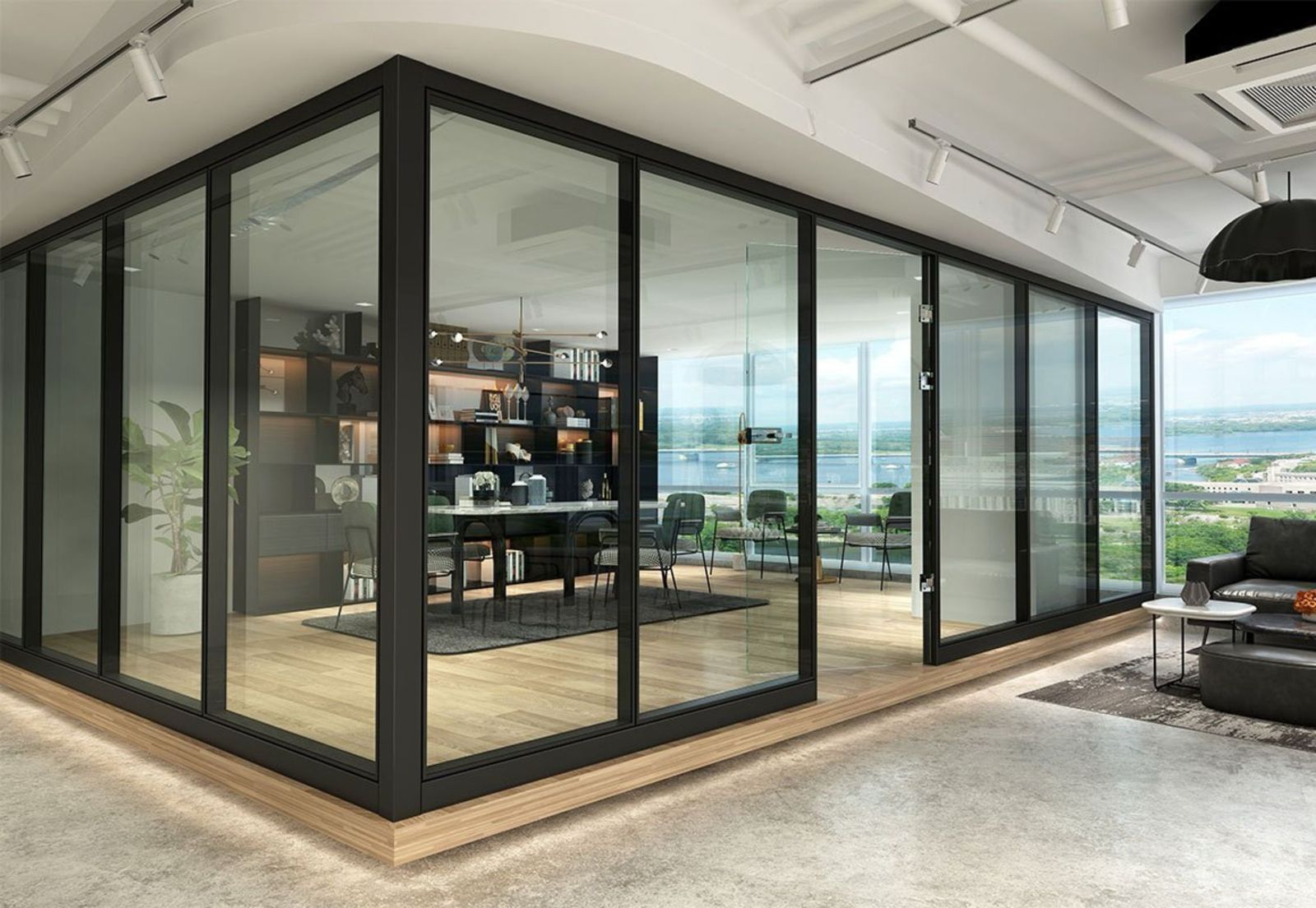
Smart Space Solutions: Internal Sliding Partitions & Doors by Fabricasto
If you are planning a home with cleaner lines, better flow, and more flexible use of space, internal partitions deserve far more thought than they usually get. Most people still picture walls as fixed and doors as separate objects added later. But in many well-planned homes, the divider itself becomes part of how the home lives day to day. That is where the idea of an internal sliding partition in India starts becoming genuinely useful, not only visually attractive. At Fabricasto, we position internal sliding partitions as a smart way to divide spaces without losing openness, while our internal doors are framed around function, durability, and refined finishes for modern interiors.
In this blog, we'll help you decide which of these two solutions works better for you.
Why internal sliding partitions are gaining relevance in Indian homes
One of the biggest shifts in residential planning has been the move towards more adaptable layouts. Homes are expected to do more now. A dining area may need to feel open when guests are over, but quieter during work hours. A study corner may need visual separation without becoming dark. A family lounge may need to connect easily with a deck, courtyard, or larger living zone while still allowing moments of privacy. That is why open-plan living in India is rarely about keeping every space permanently open. It is more often about giving you the ability to change the degree of openness. That is exactly where an internal sliding partition becomes useful.
There is also a practical reason this works well in many Indian homes. Swing doors need arc clearance and full-height masonry walls block light and make changes difficult once the house is complete. But a well-designed sliding partition can separate spaces while using less operating area and preserving visual connection. It can also help a home feel more breathable, especially when the aim is not full isolation but adjustable zoning.
What does an internal sliding partition do?
A good internal sliding partition is not only a movable divider. It performs three jobs at once.
- First, it helps define zones without making them feel permanently shut off.
- Second, it lets light move through the interior more freely than a full opaque wall would.
- Third, it gives you a stronger sense of control over how a room functions at different times of day.
That is why the best systems often work well in homes where the owner wants flexibility without losing composure in the design. This is also where an internal glass door or glazed sliding panel becomes especially relevant. When you use glass within a framed sliding system, you can maintain a line of sight and daylight while still creating a boundary.
Depending on the finish, the glass can feel almost invisible or deliberately architectural. The success of the result depends less on the idea of glass itself and more on how the frame, track, profile proportions, and privacy level are handled.
Where internal sliding partitions work best in a home
Not every home needs a sliding partition, nor does every room. But where they fit well, they solve more than one problem at once.
Living and dining zones
This is one of the strongest use cases. In many homes, you want the living and dining areas to feel connected most of the time. But there are also moments when partial separation helps, especially during gatherings, family routines, or quieter evenings. A sliding room divider lets you create that shift without changing the basic openness of the plan.
Study spaces and home offices
A study that sits off the living room often needs borrowed light from surrounding spaces. A full wall can make it feel enclosed too quickly. A sliding glazed partition can create visual separation while keeping the space brighter and less boxed in. For homes where work-from-home needs have changed how rooms get used, this kind of partition often feels much more intelligent than a purely decorative divider.
Kitchen-adjacent zones
Some homeowners want the kitchen visually connected to a dining or family area but not permanently exposed. In that situation, a sliding internal partition can become a middle path. It allows the kitchen to remain open during informal use and be screened when needed.
Bedrooms with dressing or lounge extensions
In larger homes, internal sliding partitions often work well between a bedroom and a dressing space, or between a bedroom and a small private lounge. Here, the aim is not dramatic reconfiguration. It is quieter zoning. The partition gives you the option to make the room feel more contained or more open without cluttering it with additional swing doors.
Internal sliding partition vs hinged internal door
|
Parameter |
Internal sliding partition |
Hinged internal door |
|
How it uses space |
Moves along a track and avoids door swing clearance |
Needs opening arc and clear space around the leaf |
|
How it divides rooms |
Better for flexible zoning between connected spaces |
Better for full separation of one room from another |
|
Visual openness |
Usually stronger, especially with glass or slim framed systems |
More solid and room-by-room in character |
|
Daylight transfer |
Works well when light needs to pass through interiors |
Depends more on the door material and surrounding wall |
|
Privacy level |
Good for adaptable privacy, less so for full acoustic separation |
Better when stronger enclosure is the main need |
|
Design effect |
Feels lighter and more integrated into an open-plan interior |
Feels more traditional and clearly room-based |
That does not mean one is better in every situation. It means the choice should align with the boundary you actually need. If the aim is a room that must close fully and feel self-contained, a hinged internal door may still be the stronger answer. If the aim is a boundary that can appear and recede as needed, a sliding room divider often makes more sense.
Fabricasto’s own interior range includes both internal doors and internal sliding partitions, which reflects this difference quite clearly.
Why glass makes partition systems more useful, not only more modern
A glass partition wall in homes is often chosen because it looks lighter, but its real value is broader than appearance. Glass lets space share light. It keeps interior volumes feeling connected. It allows a partition to define use without making the adjacent room feel cut off. In homes where depth and daylight matter, that can make a visible difference to how the plan feels.
But glass needs judgment. In locations where impact or human safety is a concern, the All India Glass Manufacturers’ Federation’s safety guidance notes that safety glass selection should be risk-based, support the intended use, and recommend laminated safety glass for balustrades, stairs, and other high-risk applications. While internal sliding partitions are a different use case, the broader lesson still matters: glazing inside a home should not be treated casually. The right glass type, thickness, and framing support need to be considered together.
What internal sliding partitions can and cannot do for privacy
This is one area where clarity matters. An internal sliding partition can give you strong visual separation and a clear sense of zoning. It can also help reduce distraction and create a more contained feeling inside an open plan. But unless the system is specifically designed for higher acoustic control, it will not behave like a full solid wall with a sealed door.
That does not make it less useful. It simply means the purpose has to be right. If you want to divide a lounge from a dining space, or a study from a family area, the partition can work extremely well. If you want complete acoustic isolation for a music room or a private bedroom suite, the detailing and system choice need much more attention.
This is why flexible interior design has become such an important idea in better homes. Flexibility does not mean every space must do everything. It means the boundaries between spaces can become more intelligent. A sliding partition is one of the clearest examples of that, because it lets you choose how open or enclosed a room feels without fixing that decision forever.
Conclusion
An internal sliding partition works best when it solves a real spatial need. It can bring flexibility into a rigid plan, preserve light where a solid wall would cut it off, and give you privacy without giving up openness. That is why an internal sliding partition in India has become more relevant to modern homes, especially where space has to do more than one job and where open-plan living in India needs better control rather than complete enclosure.
We, at Fabricasto, see these systems as part of thoughtful interior architecture. They are not only room dividers. They are tools for better living, better flow, and more precise design. When the proportions are right, the movement is smooth, and the detailing belongs to the home, the result does not feel like a workaround. It feels like the space was always meant to function that way.
FAQs
1. Are glass partition walls in homes safe for family use?
Yes, they can be safe when the glass type, thickness, framing, and support conditions are properly planned. Safety should never be treated casually with interior glazing. The right system must respond to the location, the likelihood of impact, and the way the partition will be used every day within the home.
2. Do internal glass doors provide enough privacy?
They can, depending on the type of glass and the room function. A clear internal glass door gives visual openness and borrowed light, while textured, tinted, or more private glass options reduce direct visibility. The right choice depends on whether you want the space to feel connected, screened, or nearly enclosed while still keeping some light transfer.
3. Are internal sliding partitions good for open-plan living in India?
Yes, they are often a strong fit for open-plan living in India because they let you control openness more precisely. Instead of choosing between a fully open plan and fully enclosed rooms, you get a middle layer. That makes the house easier to adapt for work, guests, privacy, and day-to-day routines.
4. Do sliding partitions help with noise control inside a home?
They can help with visual and partial acoustic separation, but they should not be assumed to perform like a fully built wall unless the system is specifically designed for stronger acoustic control. They work best where the need is zoning, privacy, and calmer room definition rather than complete sound isolation between spaces.
5. How is Fabricasto’s approach different for internal sliding systems?
We, at Fabricasto, treat the partition as part of the room’s architecture, not as a movable accessory. That means we think about proportion, movement, detailing, and how the system meets surrounding finishes. Fabricasto’s product positioning also reflects this, with a clear focus on smooth operation, privacy, and integrated design for modern interiors.