
Sliding Doors vs Casement Doors: Which Is Right for Your Home?
If you are choosing between sliding and casement doors, you are not picking between two looks. You are choosing how the opening will work every day. Your choice affects how you end up using the space, airflow, movement, how much effort it takes to clean, and even how the room connects to a balcony, lawn, deck, or courtyard. This is why the sliding doors vs casement doors question needs a proper comparison, not a quick showroom answer.
At Fabricasto, we work with both these systems in premium residential projects, so this choice never feels theoretical to us. A door has to sit well in the design, yes, but it also has to behave properly on site and in use. In this blog, we explain the differences between the two and which choice best suits your unique needs.
Sliding doors vs casement doors: what is the main difference?
A sliding door, as the name suggests, moves or slides horizontally on a track. One or more of its panels glide past each other, so the door does not swing into the room or the balcony. Fabricasto’s sliding range includes standard sliding doors, lift-and-slide, tilt-and-slide, slide-and-fold, and slimline variants, which tells you how broad this category has become in premium homes.
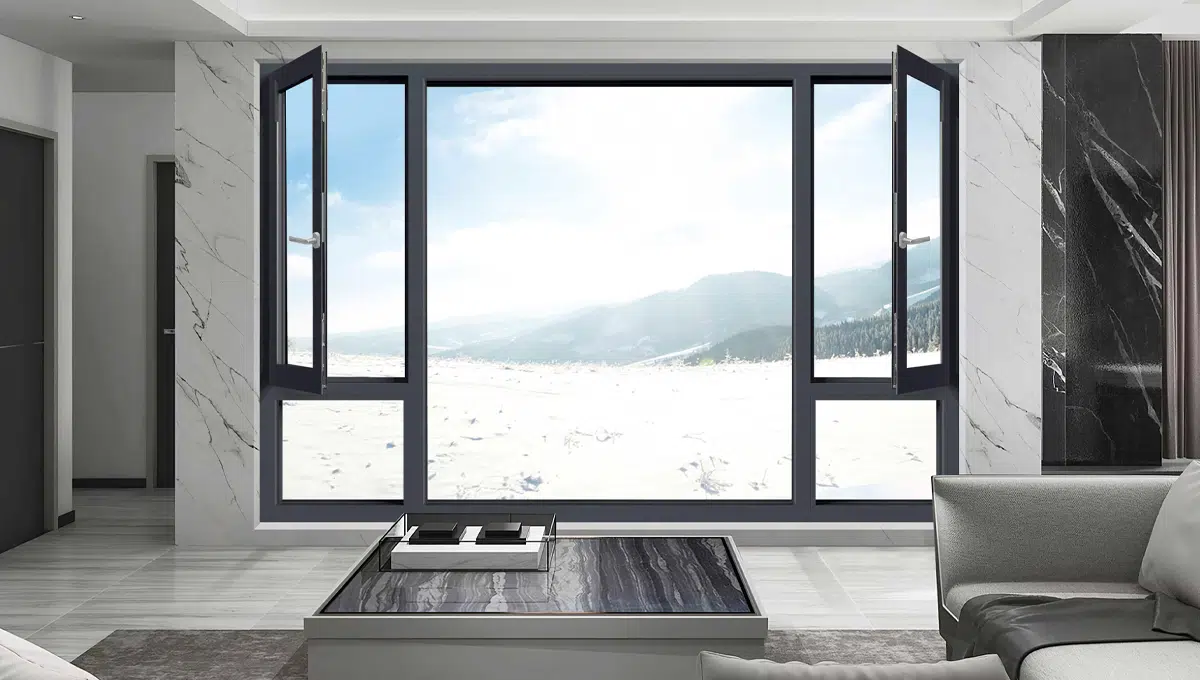
A casement door, on the other hand, opens on either side using hinges. Fabricasto’s door solutions for casement doors includes swing doors, French doors, and pivot doors, which makes casement less “old style” than people assume. It is simply a different way of using the opening.
|
Parameter |
Sliding Doors |
Casement Doors |
|
How they open |
Panels move sideways on tracks |
Panels swing open on hinges |
|
Space requirement |
Do not need swing clearance |
Need clear arc space to open |
|
Ventilation potential |
Lower effective opening in many common formats |
Higher effective opening when fully open |
|
Best for views |
Strong choice for wider glazed openings |
Better for full-width opening, but frames can interrupt wider compositions |
|
Movement pattern |
Controlled, gliding operation |
Direct, full-swing access |
|
Daily use |
Useful where movement space is tight |
Useful where full opening and quick access matter |
|
Design fit |
Strong for clean, minimal, wide-opening layouts |
Strong for swing-led, French-door, courtyard, and traditional-modern formats |
|
Typical concern |
Track quality, alignment, cleaning, interlock performance |
Swing clearance, hinge quality, wind pressure, sealing consistency |
Note: ENS 2024 gives a useful default comparison for openable area: casement = 90%, sliding (2 panes) = 50%, and sliding (3 panes) = 67%. That does not decide the whole door choice, but it does explain why sliding and casement doors feel different in real ventilation use.
Where do casement and sliding doors work best in a home?
No single answer works for every room. The right door often changes within the same house.
Balcony, deck, and lawn-facing openings
Sliding doors usually work better here, especially when the opening is wide or the inside furniture layout is tight. They keep the room usable and preserve circulation near the threshold. This is where many premium homes begin their search for the best sliding doors in India, because the opening is doing both an architectural and a day-to-day job.
Bedrooms, courtyards, and private terraces
Casement doors can work very well in these locations. They give you a wider effective opening, cleaner air, and a more direct transition when you want to step out quickly. If the opening is modest in size, the swing is rarely a problem.
Sliding doors vs casement doors for retrofit and door replacement
If you are planning door replacement in Delhi or NCR, site conditions matter as much as product choice. Old openings are not always square, floor levels may have changed, and balcony thresholds may need rethinking. In dusty, high-use urban homes, the quality of the new system and the installation approach matter more than whether the sales pitch sounds premium. Fabricasto’s Delhi presence, Faridabad manufacturing base, and project-led approach make this a very real part of planning, not an afterthought.
What to check before choosing any aluminium door systems
If you are comparing aluminium door systems, do not stop at the opening style. The real decision sits in the execution details.
Opening size and sash weight
The larger the opening, the more system capability matters. Sliding doors, especially at larger dimensions, need proper sash-weight handling, track stability, and glazing support.
Threshold planning
A threshold is not a minor detail. It affects water control, accessibility, cleaning, and how the inside floor meets the outside level. Bad threshold planning is one of the fastest ways to make a premium door feel ordinary.
Hardware quality
Rollers, hinges, locks, handles, and locking points decide how the door feels after real use begins. At Fabricasto, our whole brand proposition is built on precision manufacturing and long-term performance, which is why we believe that good hardware is not an add-on but part of the door itself.
Glazing and performance
Glass changes the comfort level of the room. It also changes weight, acoustic behaviour, and how the door operates. This matters even more in west-facing openings, on noisy roads, and on high-heat balconies.
Fabrication and installation
The quality of fabrication is where the promise is either delivered or lost. Tight tolerances, proper packers, correct anchoring, sealant discipline, and clean measurement work separate a reliable system from a problem door. That is why we, at Fabricasto, see the door not as a catalogue item but as part of a longer design-and-execution chain.
Conclusion
In the sliding doors vs casement doors decision, there is no universal winner. Sliding doors usually make more sense when you need space efficiency, wider glazed openings, and a cleaner visual connection to the outside. Casement doors usually make more sense when you want stronger, more effective ventilation, simpler full opening, and a more direct room-to-outdoor connection. The right answer depends on how the opening will be used, not only how it looks in isolation.
If you are choosing doors for a real home and not a mood board, that is the point that matters most. We at Fabricasto work exactly in that space where design, performance, and fabrication must align before the door is ever made. Connect with our sales reps to discuss your project requirements today.
FAQs
Which is better for a balcony: sliding doors or casement doors?
For most balconies, sliding doors are the easier fit because they do not need swing clearance. That helps in tighter rooms and compact balconies. But if your balcony is private, the opening is smaller, and airflow matters more than view width, a casement door can still be the better choice.
Are sliding doors better for small rooms?
In many cases, yes. Sliding doors work well in small rooms because they do not swing inward or outward. That leaves more usable floor area near the opening. If your furniture sits close to the balcony edge or terrace opening, a sliding system often makes the room easier to plan and use.
Are casement doors old-fashioned for modern homes?
No. That is a common misconception. A well-resolved casement door design can look just as modern as a sliding system, especially in French-door, pivot, or sharp single-leaf applications. The style depends on profile choice, proportions, and detailing, not on whether the door swings or slides.
Which door type is better for large openings facing a lawn or deck?
Sliding doors usually make more sense for larger openings because they handle width more comfortably and preserve the view better. This is where many people start comparing the best sliding doors in India. What matters most then is not only the look, but the track quality, sash capacity, interlock design, and fabrication accuracy.
What should you check before buying aluminium door systems?
Check opening size, sash weight, threshold detail, hardware quality, glazing support, fabrication accuracy, and installation method. Those factors decide whether the door will feel smooth and stable after years of use. Good aluminium door systems are not only designed well. They are fabricated and installed with discipline.
Is sliding door replacement easy in older Delhi homes?
Not always. In many door replacement projects in Delhi, older openings are out of square, the floor build-up has changed, or balcony thresholds need correction. That means replacement is rarely only about removing one frame and fitting another. Measurement, site readiness, and threshold planning often decide whether the upgrade feels clean or compromised.
Does Fabricasto offer both sliding and casement door options?
Yes. Fabricasto’s product range includes sliding doors and casement doors. The sliding side includes lift-and-slide, tilt-and-slide, slide-and-fold, and slimline options, while the casement side includes swing, French, and pivot doors. That gives you more room to match the door type to the actual opening and use case.