Aluminium Doors and Windows: The Complete Guide for Modern Homes
September 16, 2026
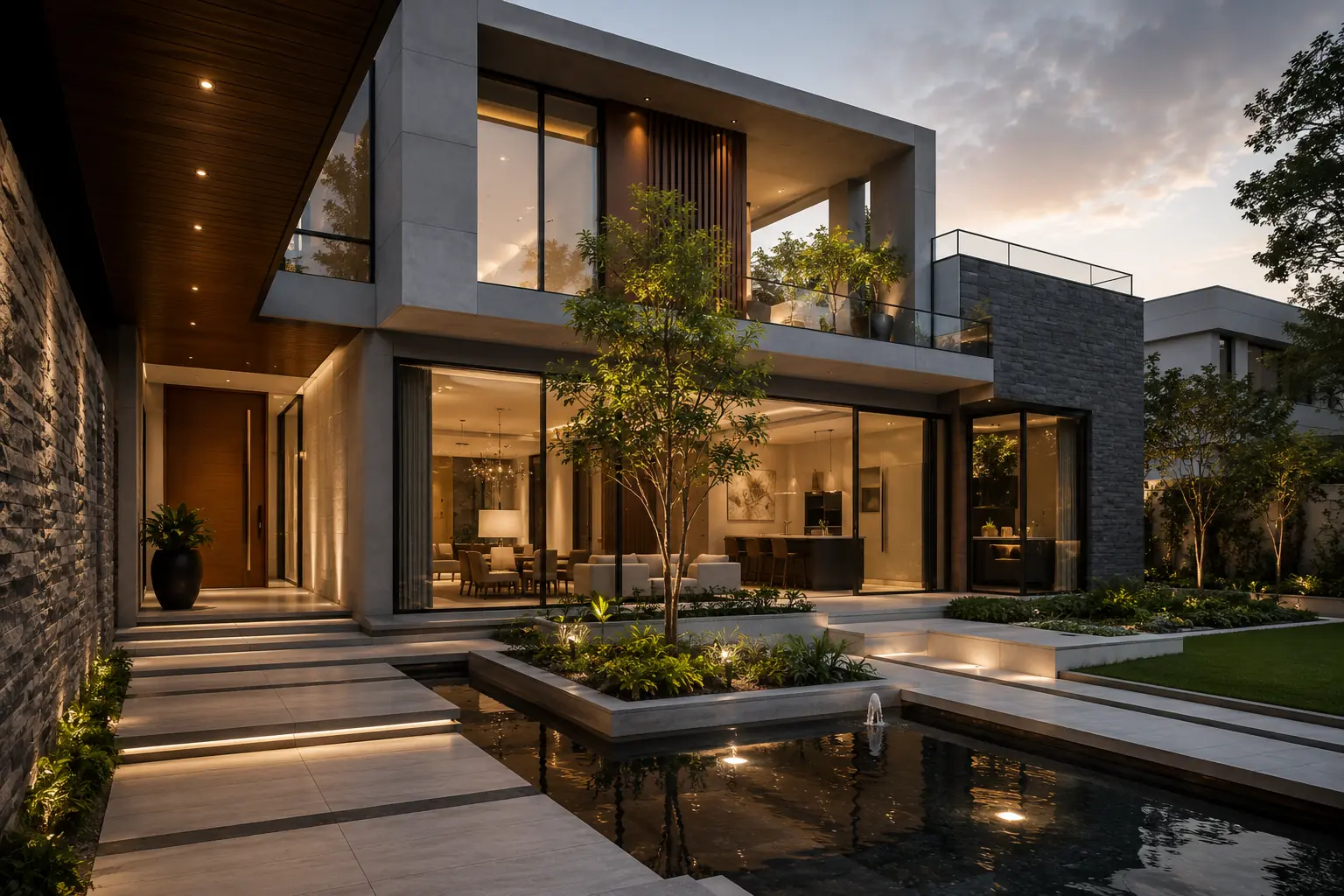
Luxury architecture is judged by finished photographs, but the difference appears much earlier. It begins with how the brief is read, how decisions connect, and how the design moves from drawings into construction. Experienced luxury architectural design companies bring architecture, interiors, engineering, materials, and execution into one conversation, so the project does not become a collection of parts. The result is a complete, comfortable home that remains easier to maintain after handover.
A luxury design company may handle planning, architecture, interior design services, consultant coordination, material selection, working drawings, site reviews, and handover. What you need to do is ask what remains included after concept approval. The answers, not surprisingly, reveal more about the company than you would know through research.
The stronger firms stay close as the project becomes more detailed. They check whether a large opening suits the structure, whether the glass fits the orientation, and whether a staircase detail can be built before finishes are fixed. This continuity matters because expensive site changes often begin with one decision being made without the related teams.
A good brief starts with your daily life rather than a style label. The team should ask how you use each room, where you need privacy, how often you host people, whether elderly family members live with you, are there children, and how service movement should work.
These details shape the plan more deeply than a mood board. A kitchen may look generous but still feel tiring if the work sequence is poor. A living room may have the right area but remain difficult to furnish because its openings leave no useful wall space.
The best top architecture firms in India return to the brief when budgets change or site conditions force a choice. It helps protect the parts of the home that matter most to you.
Luxury interior design materials cannot be selected only for colour, finish, or price. Stone can stain, timber can move with humidity, coated metal can fade, and glass can create glare or heat gain when the specification does not suit the orientation.
A good team studies the substrate, fixing method, edge detail, nearby finishes, cleaning needs, and likely wear. Full-size samples show natural variation, joint lines, reflectivity, and how a material behaves under project lighting. A capable luxury firm will not select any material based on any one of its features alone. It will review:
This becomes critical for large sliding doors and glazed façades, where a small specification error gets repeated over a large area.
Engineering and fabrication need the same early attention. Slim frames, large glass panels, flush doors, and floating stairs may look simple, but they leave little room for error. We, at Fabricasto, often join at this stage to test profile limits, panel weight, drainage, fixing access, floor levels, and installation needs before the detail is frozen. The aim is to keep the design idea intact while making the system realistic to build and service.
Concept drawings explain what the space should feel like. Working drawings and shop drawings explain how each part will be made, fixed, and connected with surrounding work. They should record dimensions, materials, hardware, tolerances, and responsibility for each junction.
This matters when architecture and interiors are handled by different teams. A window may cut through a wardrobe, a ceiling may close before a partition track is installed, or a floor may need cutting because a door system was finalised late. People searching for “architect and interiors India” may prefer one company, but a shared name does not guarantee shared information.
Mock-ups and recorded approvals help close that gap. Luxury architectural design companies know where a mock-up is worth the time and cost. It may be:
| Mock-Up Element | What to Assess & Review |
|---|---|
| Window Bay | Profile size, glass tone, handle position, and surrounding wall finishes. |
| Façade Corner | Alignment, weather sealing, and how two distinct elevation materials meet. |
| Staircase Tread | Thickness, edge detail, surface grip, and integrated lighting channels. |
| Custom Door Finish | Wood grain, protective coating, color depth, and hardware compatibility. |
| Bathroom Junction | Stone edges, glass partition placement, drainage slope, and sealant lines. |
| External Paving | Slope gradients, drainage channels, joint consistency, and surface finish. |
Clear drawing revisions also ensure high-end interior contractors, consultants, fabricators, and site teams work from the same decision.
A polished portfolio shows design ability, but not how the team responds when a project becomes difficult.
Ask to see anonymised working drawings, material schedules, site reports, and examples of changes handled during construction. Check whether the appointment covers architecture, interiors, consultant coordination, shop drawing review, site visits, snagging, and handover. You should also know who will manage the project each day rather than assuming the senior person at the first meeting will remain involved.
Where possible, speak with past clients about delays, cost pressure, and contractor errors. The strongest luxury architectural design companies can explain why a material was selected, what performance was expected, and how a detail connects with the rest of the build.
Luxury architecture is not created by adding more custom details or expensive finishes. It comes from making connected decisions and carrying them consistently from planning to installation. We, at Fabricasto, see fabrication as part of that wider process. When architects, designers, consultants, contractors, and fabricators share the right information early, the finished space holds together with fewer compromises.
They may provide architectural planning, interior design services, consultant coordination, material selection, working drawings, tender support, site reviews, and handover assistance. The exact scope differs between firms. You should confirm whether the team stays involved during shop drawing review, sample approvals, contractor queries, snagging, and final checks, as these stages affect the finished result.
Start with projects that match your scale, location, and level of detail. Then review working drawings, site reports, and the firm’s coordination process. Speak with past clients about delays, changes, and cost control. You should also confirm who will manage your project daily, since the senior person presenting the portfolio may not handle execution.
It can make coordination easier when both teams share drawings, dimensions, and approval systems. Still, one firm is not automatically better. Ask who leads architecture, who leads interiors, and how clashes are resolved. Separate specialists can also work well when responsibilities, timelines, and decision routes are clear from the beginning and followed on site.
An expensive home may use costly materials without a clear relationship between them. A luxury home feels considered in daily use. Rooms have suitable proportions, movement feels natural, materials age well, and details meet cleanly. Comfort, privacy, maintenance, and performance matter as much as visible finishes. The difference lies in judgement, coordination, and control.
Shop drawings turn a design idea into exact production and installation information. They show dimensions, sections, hardware, finishes, fixings, and tolerances. They also explain how the fabricated element meets floors, walls, ceilings, and services. Early review helps identify clashes before materials are ordered, made, or installed, when changes become slower and more expensive.
Bring specialist fabricators in during design development, before openings, floor levels, and key junctions are fixed. Early input helps check spans, panel sizes, glass weight, drainage, fixing space, and installation access. This does not reduce design freedom. It gives the architect better technical information and avoids late changes that weaken the original idea.
They set priorities early, prepare clear specifications, and compare complete systems rather than isolated rates. They also track changes before work proceeds. Good value engineering protects the main design idea while reviewing material, performance, installation, and maintenance together. Choosing the lowest quote without checking exclusions often leads to higher costs during construction or after handover.
Natural stone, timber, glass, metal, specialist coatings, and engineered surfaces all need context. Check sunlight, humidity, heat, traffic, cleaning, repair, and replacement needs. Imported materials also require realistic lead times and local support. A suitable material should work with its substrate, fixing method, and nearby finishes, not only look appealing in a showroom sample.
Climate affects glazing, shading, ventilation, waterproofing, coatings, and maintenance. Delhi NCR brings heat, dust, and winter shifts. Coastal cities bring humidity, salt, and wind-driven rain. Hill sites bring drainage, slope, and access issues. The design team should respond to the actual site instead of repeating one detail across different regions and expecting equal performance.
We, at Fabricasto, help turn design intent into systems that can be fabricated and installed correctly. We review profiles, spans, glass, hardware, fixings, finishes, and site junctions with the wider project team. Our contribution sits in the questions asked before production, when there is still time to solve details without disturbing the larger design.



Mon - Sat 9.00 to 17.00
+91-9818630247
Mon - Sat 9.00 to 17.00
+91-9818630247

Fabricasto is a trusted provider of premium doors, windows, skylights, retractable roofs, and internal partition systems. We deliver innovative architectural solutions designed to enhance aesthetics, functionality, comfort, and long-term value for residential and commercial spaces.
341, CRC Estate, MG Road, Sultanpur, New Delhi 110030
SCO-7, Block-E, Mohali Citi Centre Avenue, Punjab
Faridabad, Pali Village, Haryana 121004